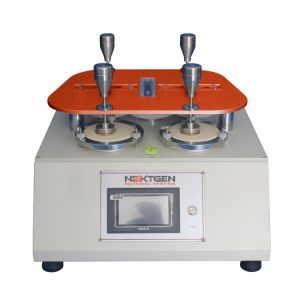
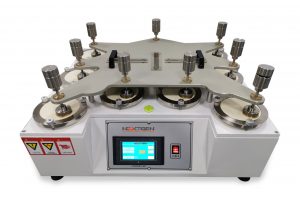
SFS 4328 is a Finnish standard commonly cited for determining the abrasion resistance of fabrics using the Martindale method. It is typically referenced for durability evaluation of textiles where controlled rubbing motion and defined end-point criteria are used to compare material performance.
If you need help mapping an incoming requirement to the right Martindale configuration (abrasion vs. pilling focus, specimen holders, loads, and abradants), talk with our team about your material and reporting needs.
SFS 4328 — Determination of fabric abrasion resistance by the Martindale method
SFS 4328 is used in textile and soft-material testing to evaluate how a fabric surface withstands wear from repeated rubbing under standardized conditions. In practice, it is used to compare constructions, fiber blends, finishes, and production lots for durability screening and quality control.
Many labs encounter SFS 4328 as a legacy or regional citation. In modern specifications, the Martindale method is often referenced through EN ISO 12947 series, so the exact wording in your purchase specification matters.
Quick definition
SFS 4328 describes a Martindale abrasion test approach where fabric specimens are rubbed against a defined abradant in a controlled multi-directional motion for a set number of cycles or until a defined failure/end point is reached.
What this standard covers
SFS 4328 is centered on abrasion resistance determination for fabrics using Martindale-type rubbing motion. It is typically used to assess surface wear behavior and durability trends rather than fundamental strength properties.
Typical outputs: Cycles to a defined end point (for example, breakdown/appearance change) or condition assessment at specified cycle intervals, depending on how the requirement is written.
Why this standard matters in testing
Martindale abrasion results are widely used to support purchasing decisions, supplier qualification, and internal release criteria for textile products. Because abrasion performance is sensitive to load, abradant choice, and end-point definition, aligning the lab setup to the cited standard and the customer’s specification is essential for meaningful comparisons.
Common materials, product types, or applications covered
SFS 4328 is most often applied to textile materials where abrasion resistance is a key durability attribute.
Common examples: Workwear and uniform fabrics, upholstery and contract textiles, shoe and lining textiles, and general woven/knitted fabrics used in consumer and industrial goods.
Common test or verification workflow
A typical workflow is built around repeatable specimen preparation, standardized rubbing action, and defined evaluation points.
- Condition specimens (when required by the controlling specification) and prepare test pieces to the required size and orientation.
- Mount specimens in Martindale holders and select the specified abradant system (for example, standard abrasive fabric and felt stack).
- Apply the specified mass/load and run for the required number of cycles or until a defined end point is reached.
- Evaluate the specimen at required intervals and report results in the format the purchasing specification calls for.
Practical caution: “Abrasion resistance” can be defined by different end points (hole formation, yarn breakage, appearance change, mass loss, etc.). The controlling requirement should define the acceptance logic—SFS 4328 may be cited alongside additional internal criteria.
Equipment commonly used for this standard
The standard is commonly associated with a Martindale abrasion tester and the accessories needed to run a repeatable rubbing cycle and document the end point.
Common equipment: Martindale abrasion tester (multi-station), specimen holders and clamping rings, calibrated loading weights/masses, cycle counter and preset stop, and an inspection light/magnification setup for consistent end-point calls.
Common consumables: Standard abradants (abrasive fabric), wool felt, foam/backing layers (when required), and cutting dies/templates for consistent specimen geometry.
If you are comparing station counts, load options, and the accessory kit needed for your material mix, you can request a detailed quote for a Martindale setup matched to your throughput and specification needs.
How to read this designation or revision
SFS designations are often cited with a year (for example, “SFS 4328:1979”), which indicates the edition being referenced. When a customer requirement cites SFS 4328 without a year, it is important to confirm which edition (and any referenced replacements) is intended.
Important clarity point: “SFS 4328” (Martindale abrasion for fabrics) can be confused with similarly formatted designations such as “SFS-EN 4328,” which refers to a different, unrelated EN standard. Always match the full designation text and subject area in the purchase specification.
Related standards, methods, or frameworks when useful
In many specifications, Martindale abrasion testing is referenced through the EN ISO 12947 series (and related Martindale pilling references depending on the product requirement). When SFS 4328 appears as a legacy citation, the controlling document may also identify the modern replacement to be used for test setup and reporting alignment.
Get help selecting a Martindale configuration
If your requirement calls out SFS 4328 and you need to align station count, loads, holders, or abradant packages to your specific fabric type and end-point criteria, contact our team and we’ll help you scope a practical, standards-aligned setup.