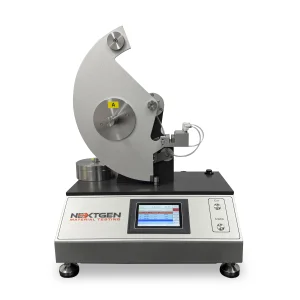
TAPPI T 414 is a test method for measuring the internal tearing resistance of paper using an Elmendorf-type pendulum tearing tester. It is widely used in paper and packaging quality programs to compare tear performance in machine direction (MD) and cross direction (CD) and to monitor consistency across production lots.
The method is based on tearing multiple plies together through a fixed distance after a starter cut is made, and then using the measured average tearing force to estimate single-sheet tearing resistance. If you need help aligning your material type, ply count, and directionality with the correct edition of the method, talk with our team.
TAPPI T 414 — Internal Tearing Resistance of Paper (Elmendorf-Type Method)
TAPPI T 414 is used to characterize how a sheet resists tear propagation when the tear is driven by a pendulum-type impulse load. It is commonly referenced for papermaking process control, incoming inspection, and performance comparisons when tear is a key end-use property.
This method is intended for internal tear (through the sheet) using an Elmendorf-type tearing tester and is not intended for edge-tear resistance. It also is not intended for single-ply tear testing.
Quick Definition
TAPPI T 414 measures the tearing force required to propagate a tear through a specified distance in paper by tearing multiple sheets (plies) together on an Elmendorf-type pendulum tearing tester.
Property measured: Internal tearing resistance (tear strength / tear resistance), typically reported by direction (MD/CD).
Test style: Pendulum (Elmendorf-type) tear with a pre-cut starter slit, using multiple plies.
What This Standard Covers
This standard covers how to prepare and test paper specimens so that multiple sheets are torn simultaneously by an Elmendorf-type tearing tester and the instrument indicates the average tearing force over the fixed tear length.
Key scope points that affect test setup and interpretation include the use of multiple plies (not single sheets), the requirement for a started tear, and the focus on internal tear rather than edge-tear behavior.
Important limitations: Results can be misleading for certain weakly bonded sheets, and care is needed when interpreting results for materials that split or delaminate during tearing.
Why This Standard Matters in Testing
Tear resistance is often a make-or-break property for converting, handling, and end-use durability. For many papers, it is sensitive to fiber type, refining level, bonding, orientation, and basis weight—so it is frequently used to track production changes and to qualify materials against internal specifications.
Because the method uses multiple plies and a relatively low tear rate as the pendulum continues the tear, it is especially important to apply the method consistently (ply count, direction, instrument capacity) when trending results over time.
Common Materials, Product Types, or Applications Covered
TAPPI T 414 is commonly applied to paper where internal tear strength is a relevant quality attribute.
- Printing and writing papers (tear balance and runnability considerations)
- Packaging and converting papers where tear propagation is a performance concern
- Directional papers where MD/CD differences are significant (tested and reported by direction)
For highly directional papers or boards, specimen preparation and orientation become especially important, and labs may use companion guidance focused on cross-directional internal tearing specimen preparation.
Common Test or Verification Workflow
TAPPI T 414 is typically used as a routine physical-property test in paper QA/QC and product qualification.
Common workflows: Incoming material verification, production control trending, supplier comparison, product qualification to internal specs, MD/CD property profiling.
Typical reporting: Tear resistance results by direction (MD and CD) with enough detail to reproduce the setup (instrument range/capacity and ply count).
Practical caution: The ply count is commonly adjusted so the reading falls in a useful portion of the instrument’s scale; changing ply count or instrument capacity can change comparability if not controlled.
Equipment Commonly Used for This Standard
The equipment path for TAPPI T 414 centers on an Elmendorf-type tearing tester configured for paper testing and supported by consistent specimen preparation tools.
Common equipment: Elmendorf-type pendulum tearing tester (paper configuration), appropriate pendulum capacity/range options, specimen cutting template or die, starter-slit cutting tools, calibration/verification accessories as required by the instrument and lab procedures.
What to match when specifying a system: The expected tear-strength range (to select the right pendulum/range), sample thickness and stiffness (handling and clamping considerations), and whether your workflow requires frequent MD/CD testing with high repeatability.
If you are selecting an Elmendorf tear tester or comparing capacity packages for your paper grades, you can request a detailed quote for an equipment configuration matched to your target tear range and throughput.
How to Read This Designation or Revision
TAPPI standards are often cited with a letter/number designation and an edition suffix (for example, “TAPPI T 414 om-25”). The suffix is commonly used to identify the edition year of the document.
Revision sensitivity: Tear testing is setup-sensitive (ply count guidance, instrument range expectations, specimen preparation details, and reporting conventions). For contractual requirements and customer specs, match the exact cited edition rather than assuming older and newer editions are interchangeable.
Related Standards, Methods, or Frameworks
Depending on the product type and how tear is specified, labs may also reference other internal tear and tear-related methods alongside TAPPI T 414.
- TAPPI T 496: Specimen preparation guidance for cross-directional internal tearing resistance for paper/paperboard and related materials.
- TAPPI T 470: Edge tearing resistance of paper (Finch method) when edge-tear (not internal tear) is the requirement.
- ISO 1974: An Elmendorf-based tear method commonly referenced for paper tear resistance in ISO-based specifications.
If a customer or regulatory document cites multiple tear standards, use the cited method family (internal tear vs edge tear, Elmendorf vs other approaches) to avoid selecting the wrong test setup.
Request equipment help for TAPPI T 414 testing
For help selecting an Elmendorf tear tester range, accessories for repeatable specimen preparation, or a configuration that fits your paper grades and reporting needs, contact our team with your material type, basis weight range, and target tear range.