NG-EML Series D – Floor Standing Universal Testing Machine (50 kN – 1000 kN)

Metal Testing Equipment
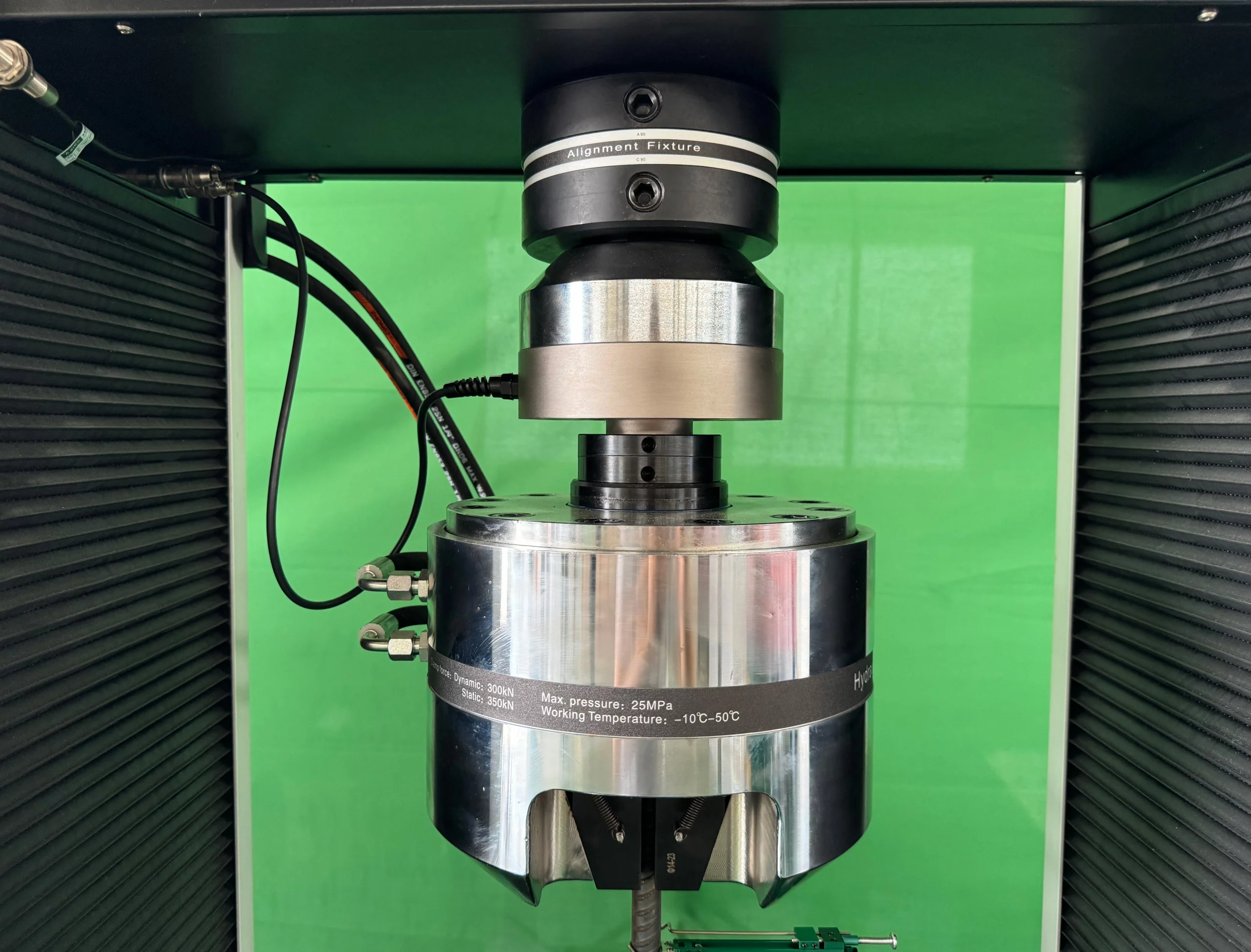
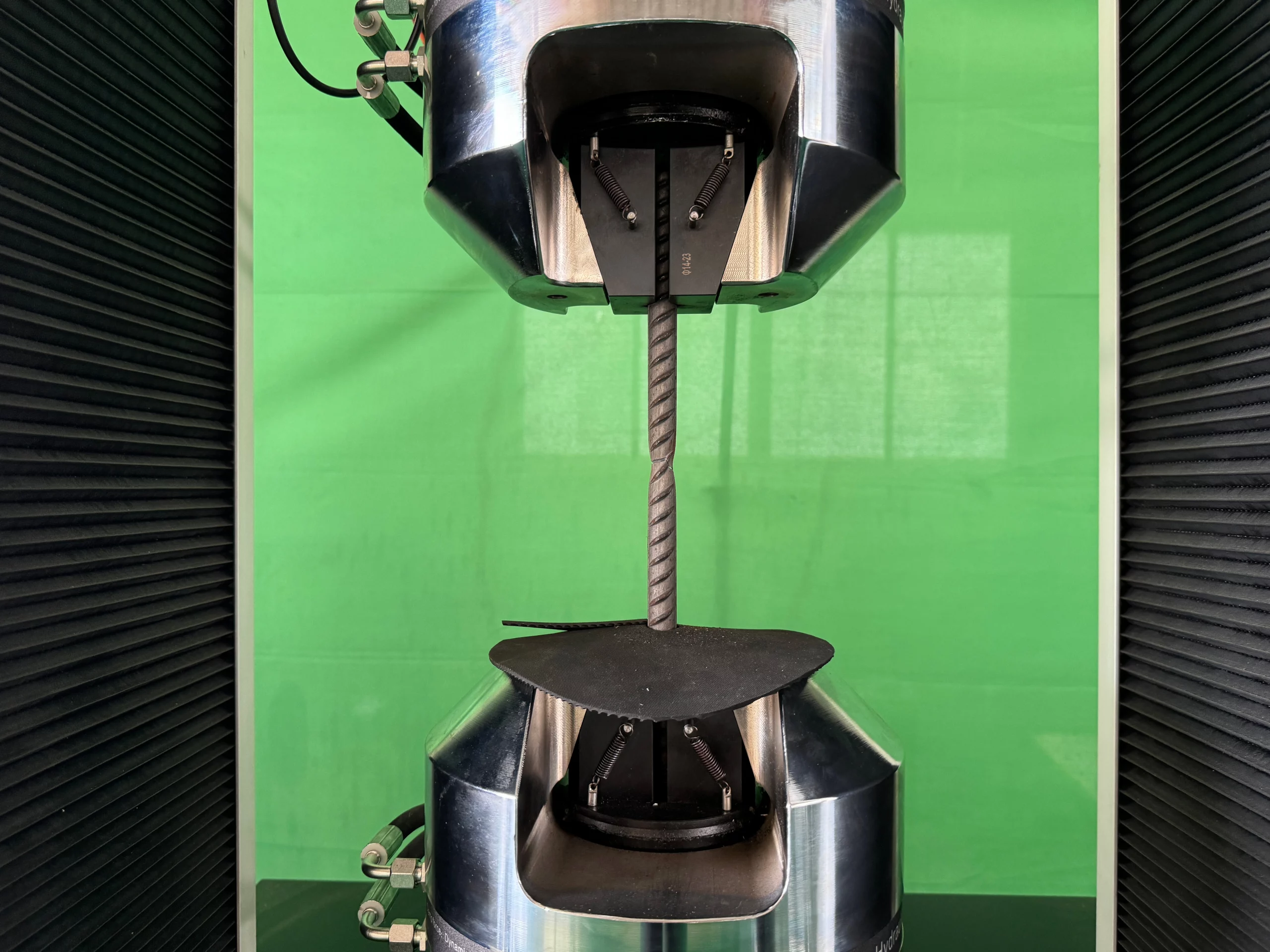
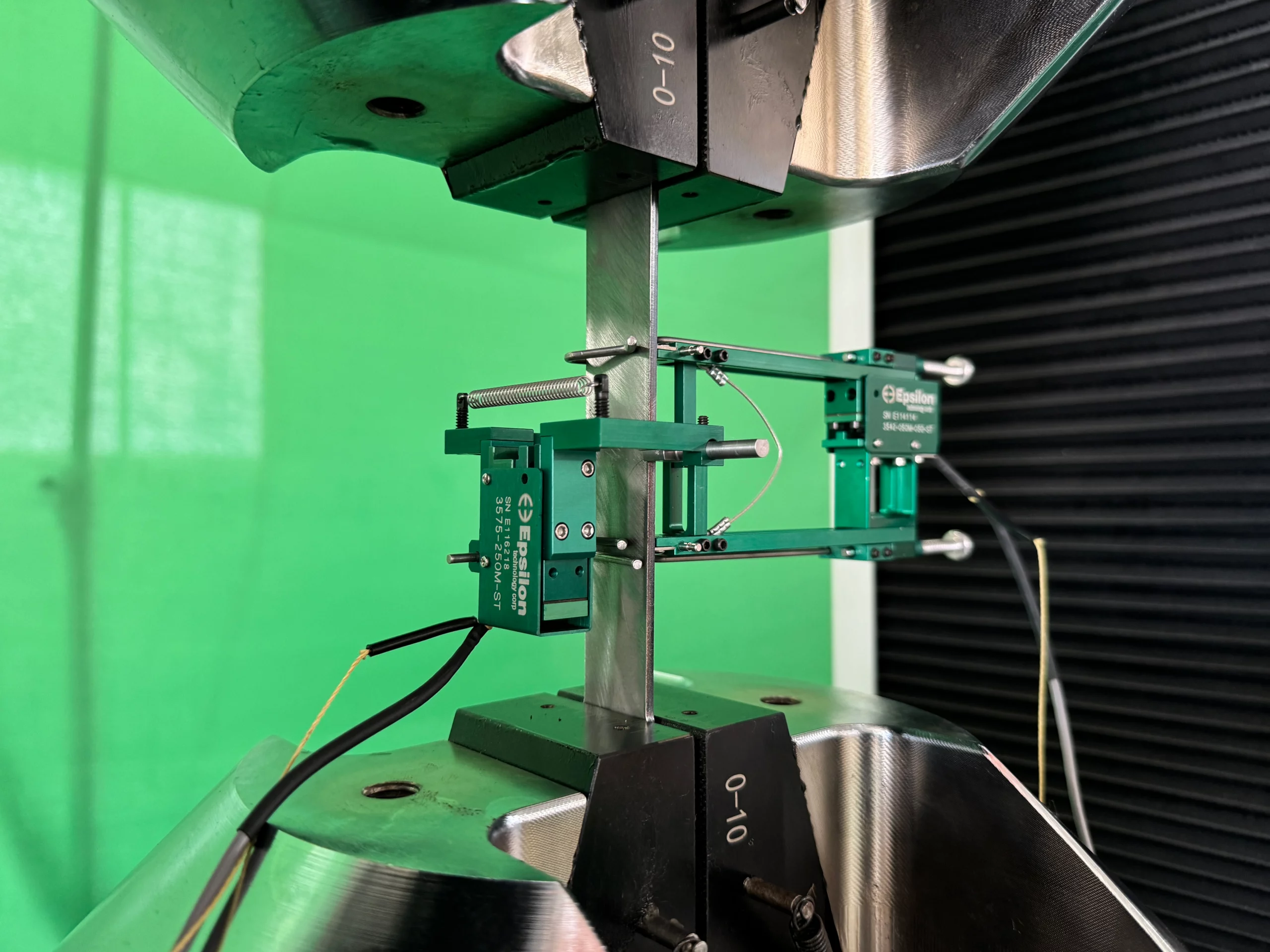
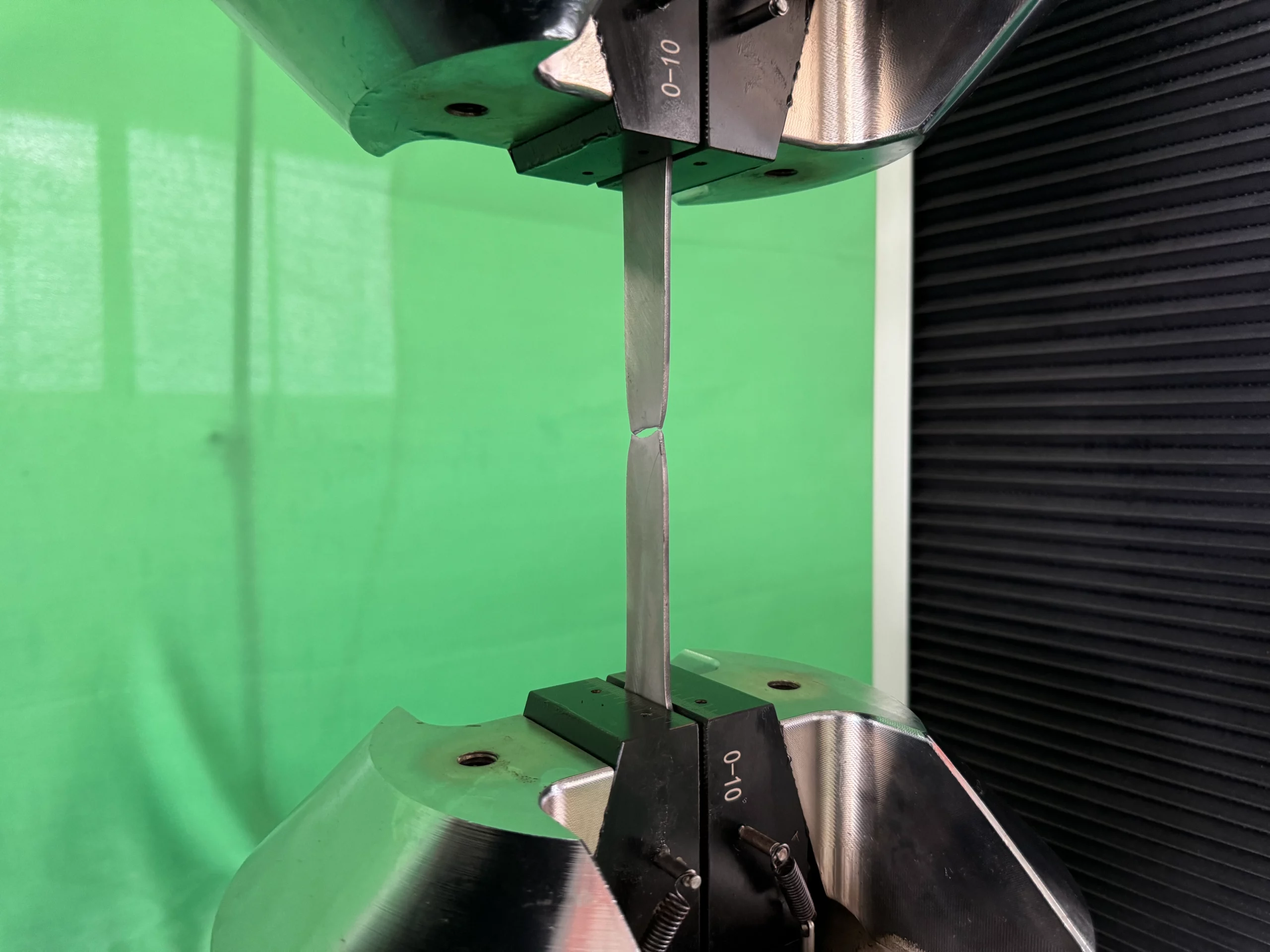
Standards
ASTM D412, ASTM E8, ISO 7500-1, ASTM E4, ISO 527, ISO 604, ISO 1184, ISO 37, ASTM D638, ISO 6892-1, ASTM E21


Description
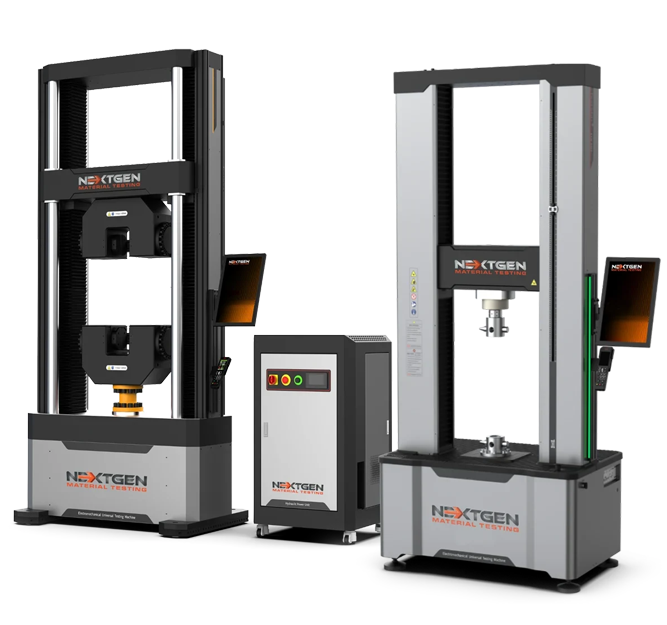
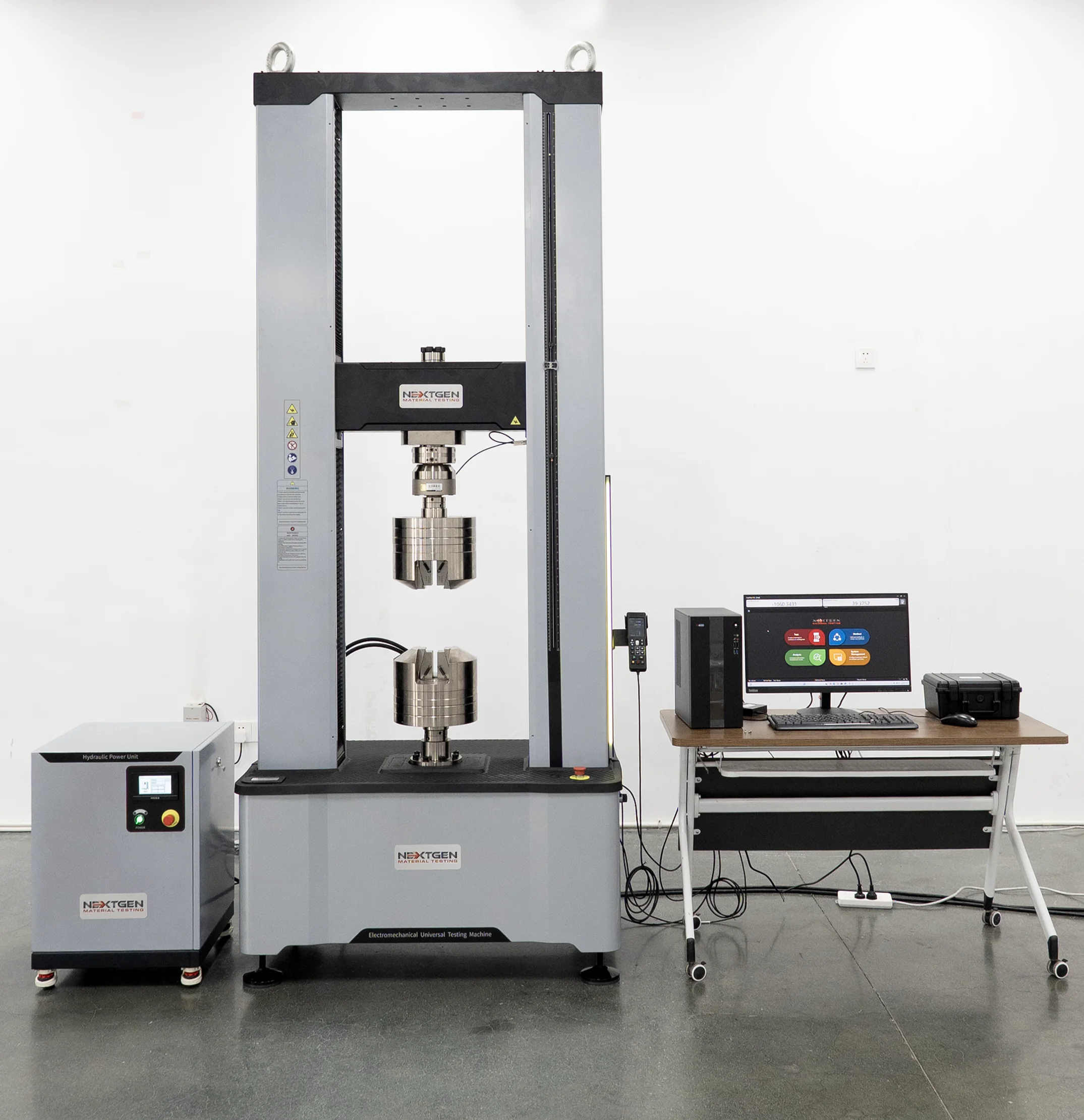
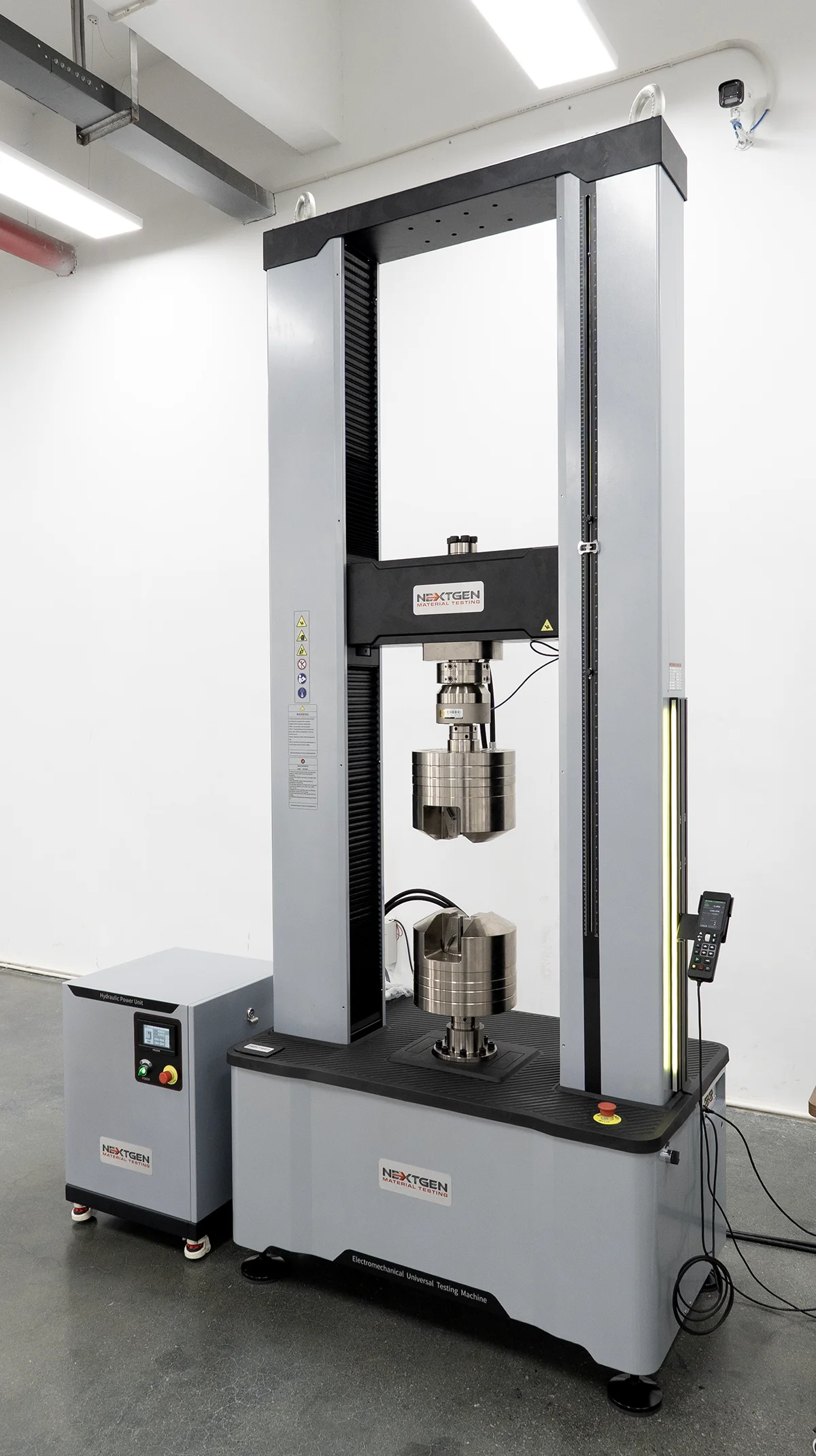
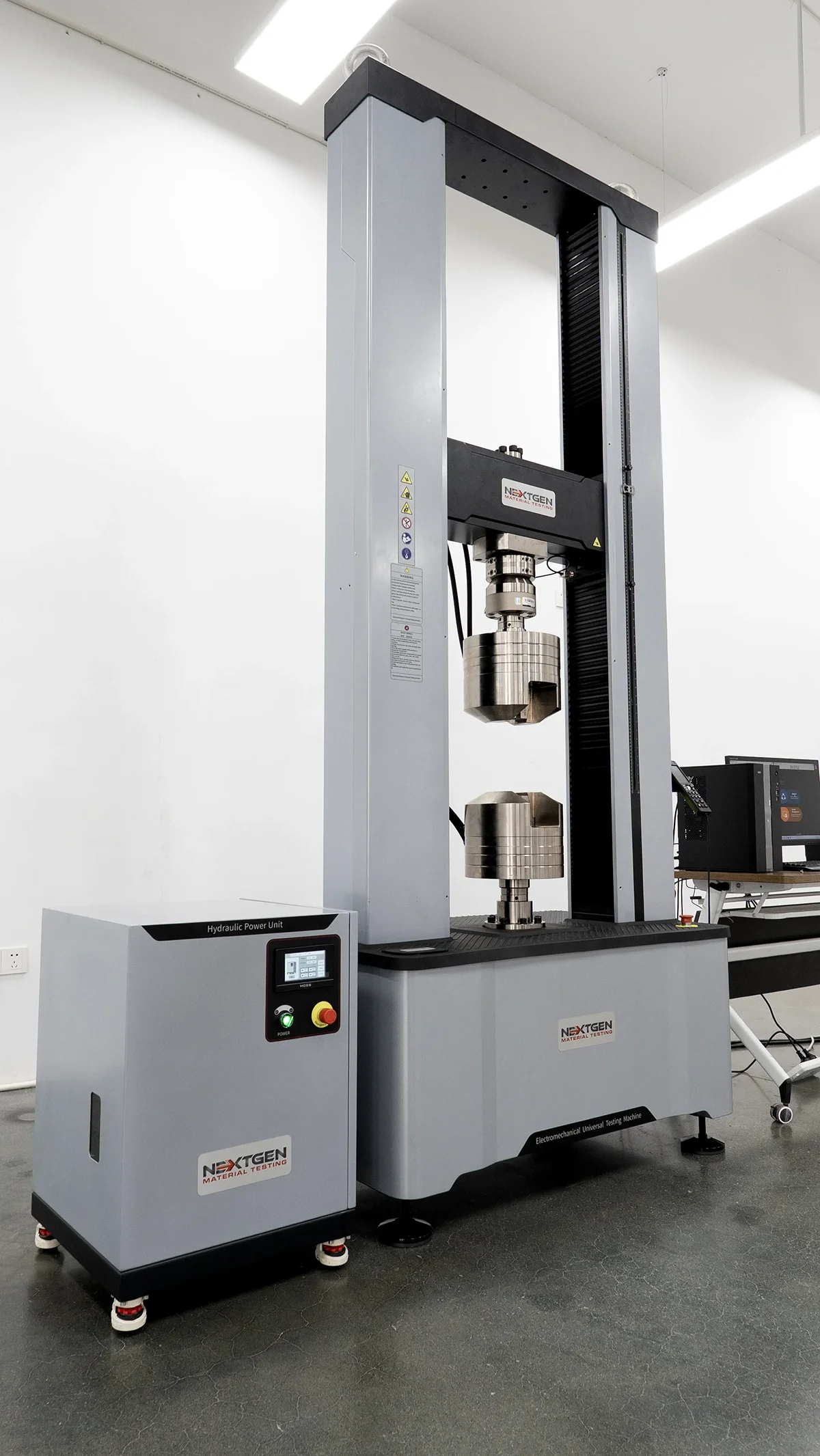
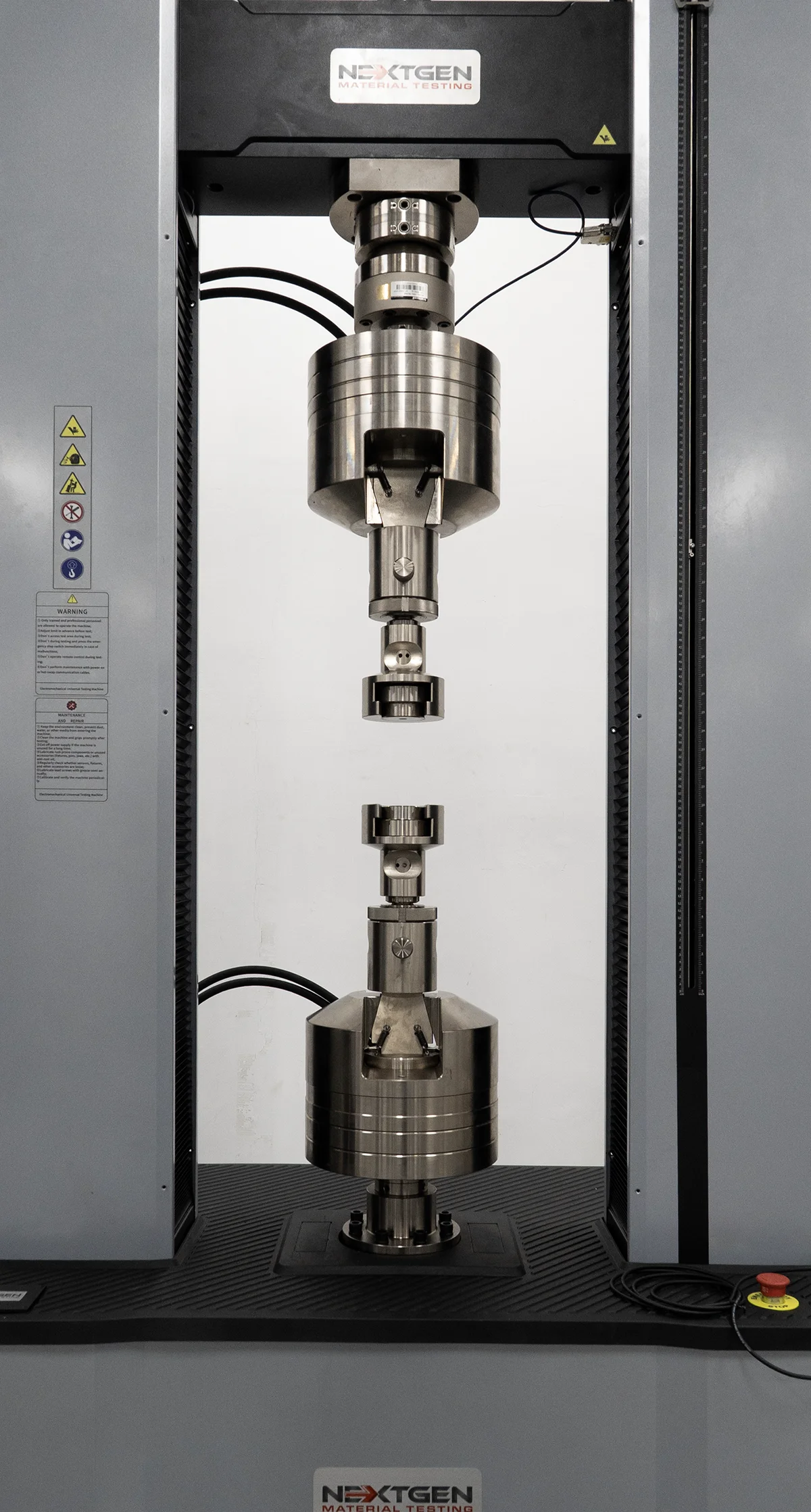
The NG-EML Series D is a floor-standing electromechanical universal testing machine for high-force material testing from 50 kN to 1000 kN. It is designed for tensile, compression, flexural, and cyclic testing of high-strength metals, advanced composites, high-temperature alloys, structural materials, and large specimens.
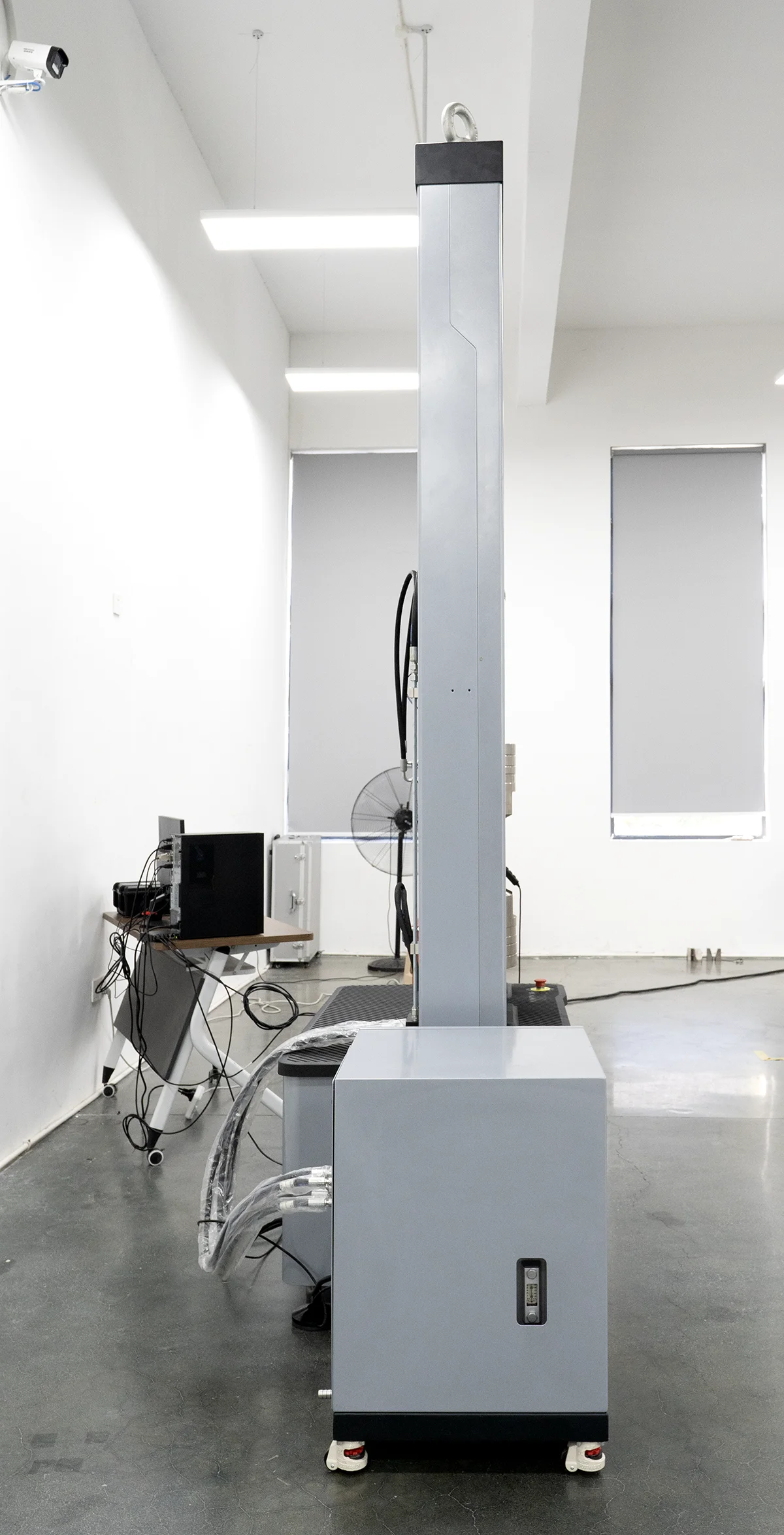
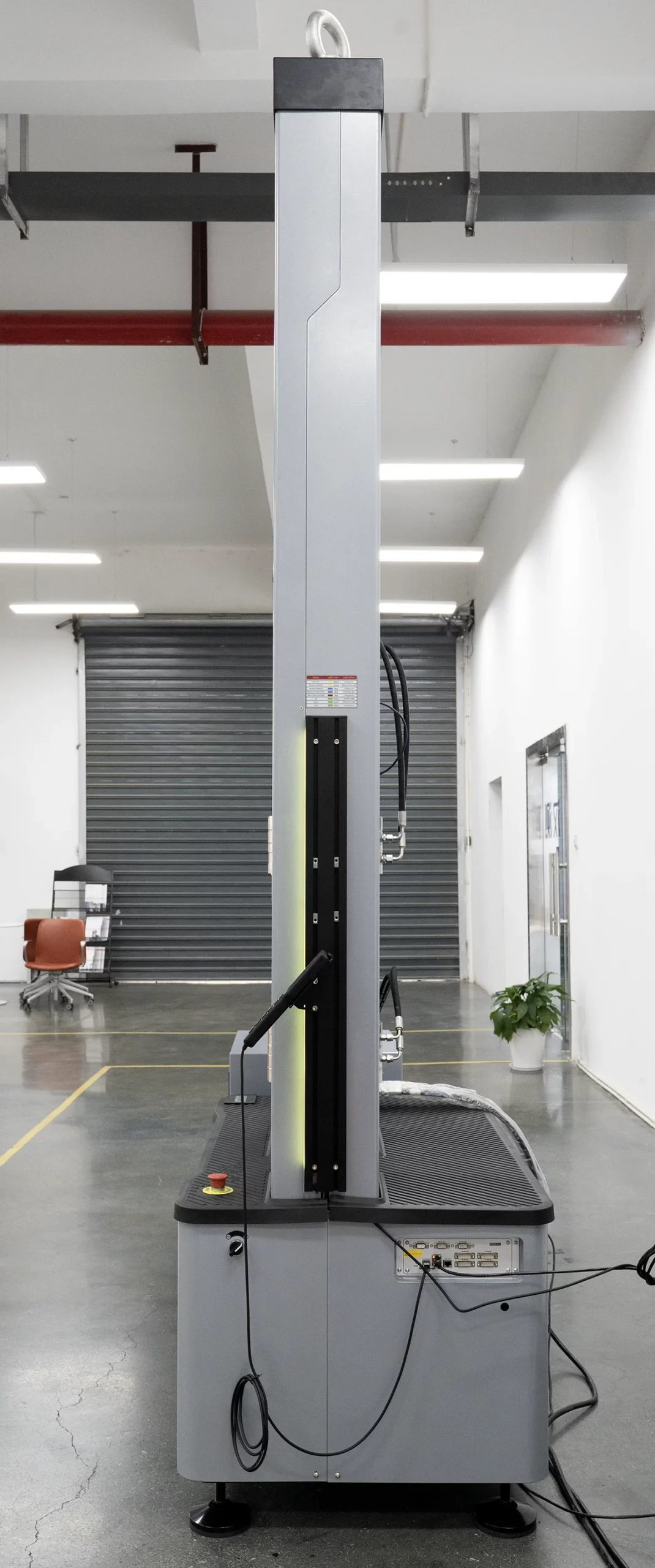
The system uses a dual-column frame, FEA-optimized structure, preloaded ball screws, servo direct-drive actuation, and closed-loop control to support stable testing under high loads. Single-space, dual-space, and extended-travel configurations are available for different specimen lengths, fixtures, and test setups.
- Force Capacity Options: 50 kN, 100 kN, 200 kN, 300 kN, 500 kN, 600 kN, 1000 kN (11240 - 224800 lbf)
- Frame Configuration: Dual-column, floor-standing electromechanical frame with servo direct-drive and synchronous belt transmission
- Test Space: Available in single-space and dual-space configurations; extended-travel models offered for long specimens or specialized fixtures
- Typical Applications: Suited for high-strength metal testing, composite development, material fatigue studies, thermal testing, and advanced quality control in aerospace, automotive, manufacturing, and research laboratories
Technical Specifications
| Model | NG-EML 50-100 | NG-EML 200-300 | NG-EML 500-600 | NG-EML 1000 |
|---|---|---|---|---|
| Force Capacity | 11,240 / 22,480 lbf (50 / 100 kN) | 44,960 / 67,440 lbf (200 / 300 kN) | 112,400 / 134,880 lbf (500 / 600 kN) | 224,810 lbf (1000 kN) |
| Frame Type | Floor-standing | |||
| Test Space | Single-space / Dual-space | |||
| Max Speed | 850 mm/min | 600 mm/min | 330 mm/min | 300 mm/min |
| Min Speed | 0.00005 mm/min | |||
| Return Speed | 1200 mm/min | 500 mm/min | 400 mm/min | |
| Position Resolution | 0.0095 µm | 0.0067 µm | 0.011 µm | 0.011 µm |
| Frame Stiffness | 270 kN/mm | 380 kN/mm | 900 kN/mm | 1300 kN/mm |
| Weight | 2205 / 2690 lbs (1000 / 1220 kg) | 2701 / 3307 lbs (1225 / 1500 kg) | 6528 / 7654 lbs (2960 / 3470 kg) | 12,082 / 13,621 lbs (5480 / 6180 kg) |
| Power Supply | 2 kW | 7 kW | 11 kW | |
| Voltage | 3-phase AC 220 V ±10 %, 50 Hz / 60 Hz | |||
| Common Parameters | |
|---|---|
| Accuracy | Class 0.5 |
| Force Range | 500 N - 1000 kN (0.2% - 100% FS) 10 N - 250 N (0.4% - 100% FS) |
| Calibration Standard | GB/T 16825.1, ISO 7500 (Class 0.5), ASTM E4 |
| Speed Accuracy | ±0.2% of set speed |
| Position Accuracy | ±0.2% of set position |
| Force Resolution | 1 / 600000 FS |
| Extension Resolution | 1 / 600000 FS |
| Strain Accuracy | Better than GB/T 228, ISO 6892-1, ASTM E8, ASTM E21 |
| Safety Protection | Overload protection (103% of rated force), position limit, over-voltage protection |
| Single-Channel Data Sampling Rate | 1200 Hz |
| Control Frequency | 1200 Hz |
| Environmental and Operational Conditions | |
|---|---|
| Working Temperature | +5 °C to +40 °C |
| Storage Temperature | −25 °C to +55 °C |
| Relative Humidity | At 20 °C, +10% to 90%, non-condensing |
| Maximum Operating Altitude | 2000 meters |
| Motor Type | AC servo motor |
| Ball Screw | Pre-loaded |
| Position Measurement | Optical encoder |
Typical Test Specimens
Designed for high-precision testing of advanced and high-strength materials, the NG-EML Series D system supports a broad range of specimen types, including:
- Rubber, elastomers, and soft polymers (ASTM D412, ISO 37)
- Engineering plastics and reinforced composites (ASTM D638, ISO 527, ISO 604)
- Metal sheets, rods, and wires including high-strength steels (ASTM E8, ISO 6892-1, GB/T 228)
- High-temperature alloys and prepregs (ASTM E21, ISO 7500)
- Biodegradable plastics and flexible polymers (ISO 1184)
- Flexible electronics and printed substrates
- Structural materials and components tested at elevated loads and temperatures
- Samples requiring advanced strain-rate control or waveform-driven testing procedures
Key Features
- Floor-standing dual-column frame: FEA-optimized structure, reinforced guidance columns, and linear guides help maintain alignment and reduce deflection under high loads.
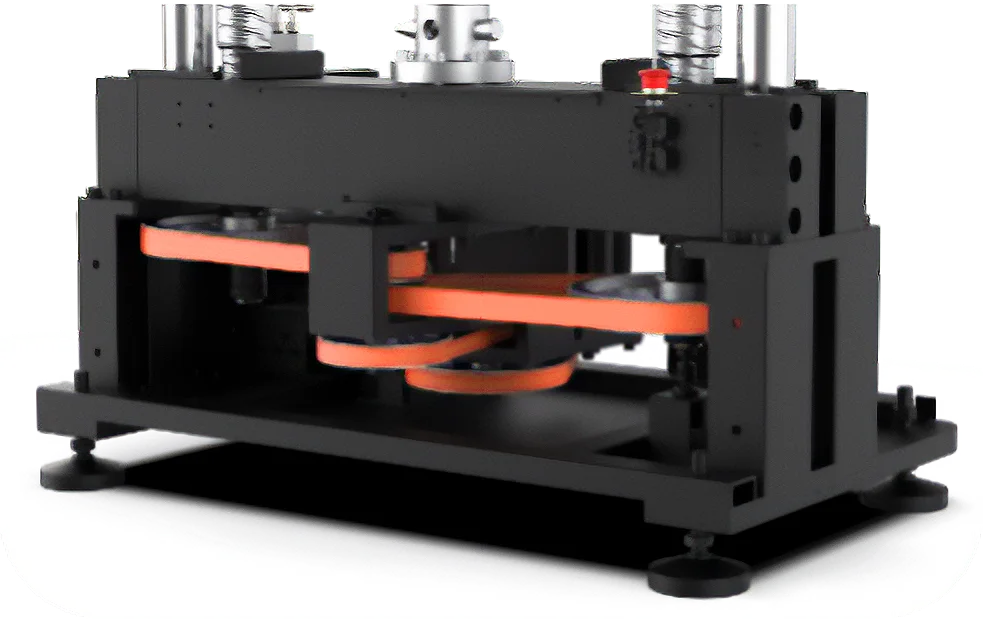
- Direct-drive servo actuation: Servo motor and synchronous belt transmission provide smooth motion, low vibration, and reduced mechanical backlash.
- Preloaded precision ball screws: Support consistent force transmission during high-force, cyclic, tensile, compression, and flexural testing.
Control System and Operator Interface
The NG-EML Series D uses a digital closed-loop controller for synchronized force, displacement, strain, and accessory signal control during high-force material testing.
- USB and Ethernet connectivity: The system supports USB and Ethernet TCP/IP communication for host PC control, lab networking, remote operation, and external data workflows.
- 1200 Hz closed-loop control: Force, position, and extensometer signals are synchronized at up to 1200 Hz for real-time test control and data acquisition.
Structural Rigidity and Direct-Drive Servo Control
The NG-EML Series D uses a reinforced dual-column floor-standing frame designed to maintain alignment and reduce deflection under high-force loading.
- FEA-optimized frame: Reinforced columns and crosshead geometry help increase frame stiffness and minimize deflection across the full test range.
- Robust guidance system: Self-lubricating guidance columns and linear guides support straight, low-friction crosshead travel under load.
Integrated Safety and Protection
The NG-EML Series D includes multi-layer hardware and software protection for high-force testing, helping protect the operator, specimen, load cell, and drive system during setup and operation.
op
- Collision detection: The system monitors force changes in real time. If an abnormal force spike, obstruction, or specimen failure is detected, crosshead movement stops automatically.
- 103% overload protection: The test is stopped when the applied load exceeds 103% of the rated force capacity.
- Travel limit safeguards: Mechanical limit switches and software-defined stroke limits help prevent crosshead overtravel.
Operation and Maintenance
The NG-EML Series D is designed for straightforward daily operation and accessible routine maintenance in high-force testing environments.
- Guided setup: GenTest™ software provides standards-based templates, step-by-step test configuration, live graphing, and automatic result calculations.
- Reporting and export: Post-test tools support modulus, yield strength, peak force, batch processing, raw data export, and formatted reports.
Mechanical Architecture and Load Cell Integration
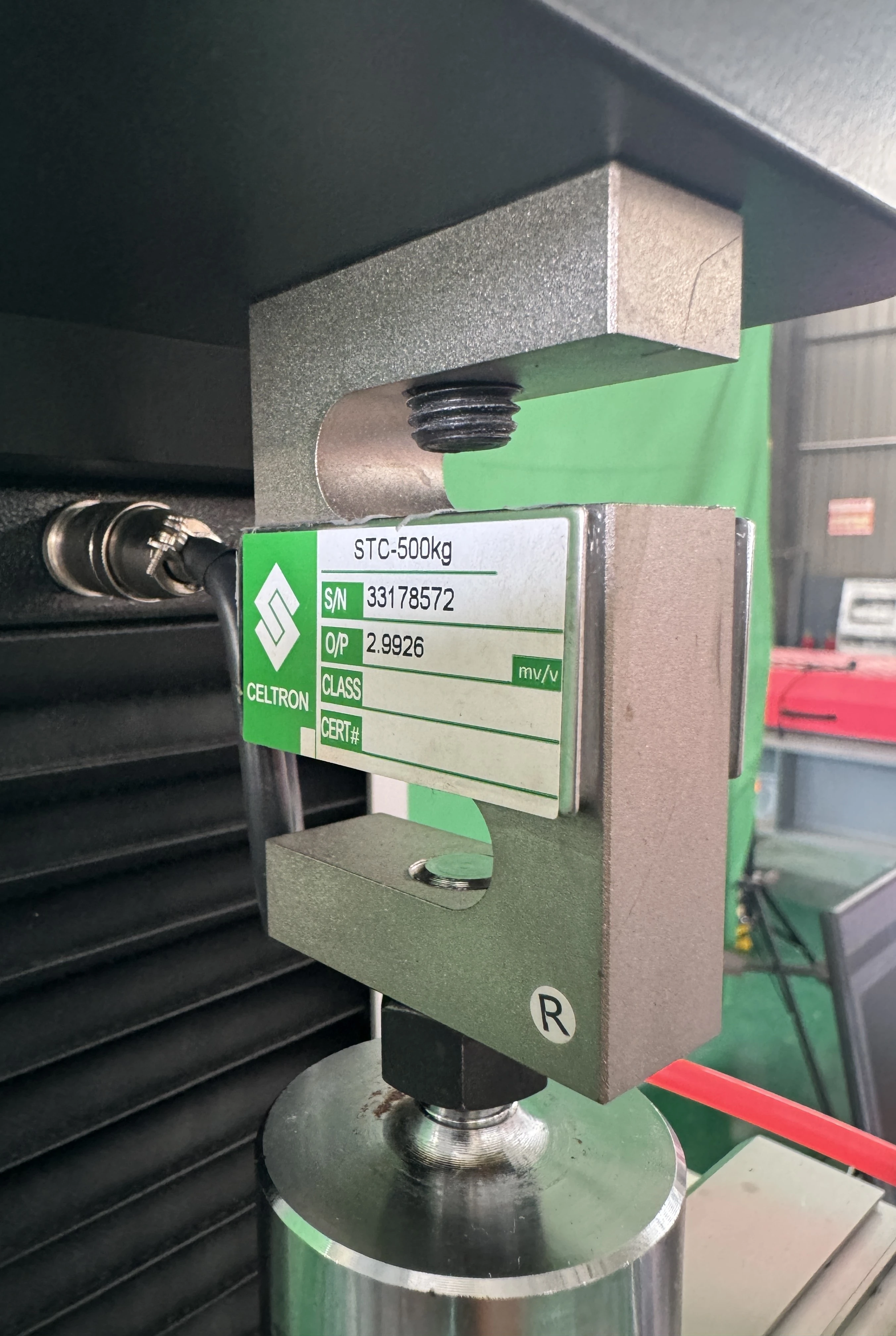
The NG-EML Series D combines a reinforced dual-column load frame, servo-based position feedback, calibrated load cells, and multi-channel acquisition for stable high-force testing up to 1000 kN.
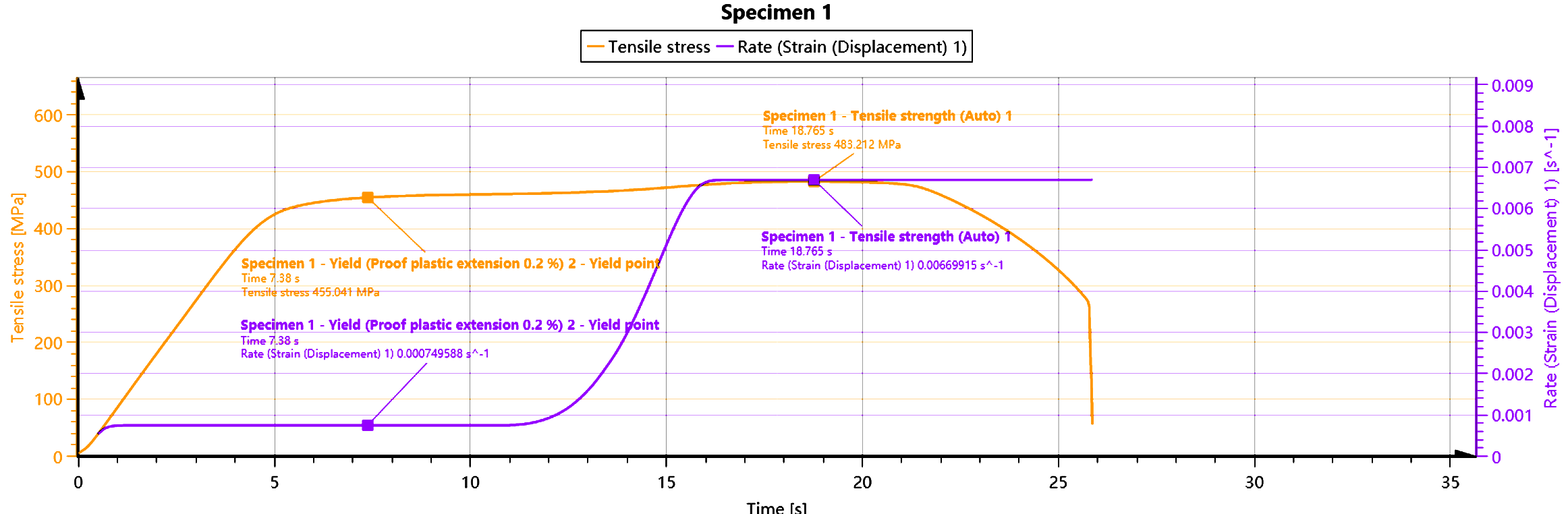
 Closed-loop feedback control: PID-based control manages force, displacement, and strain during changing material behavior and loading conditions.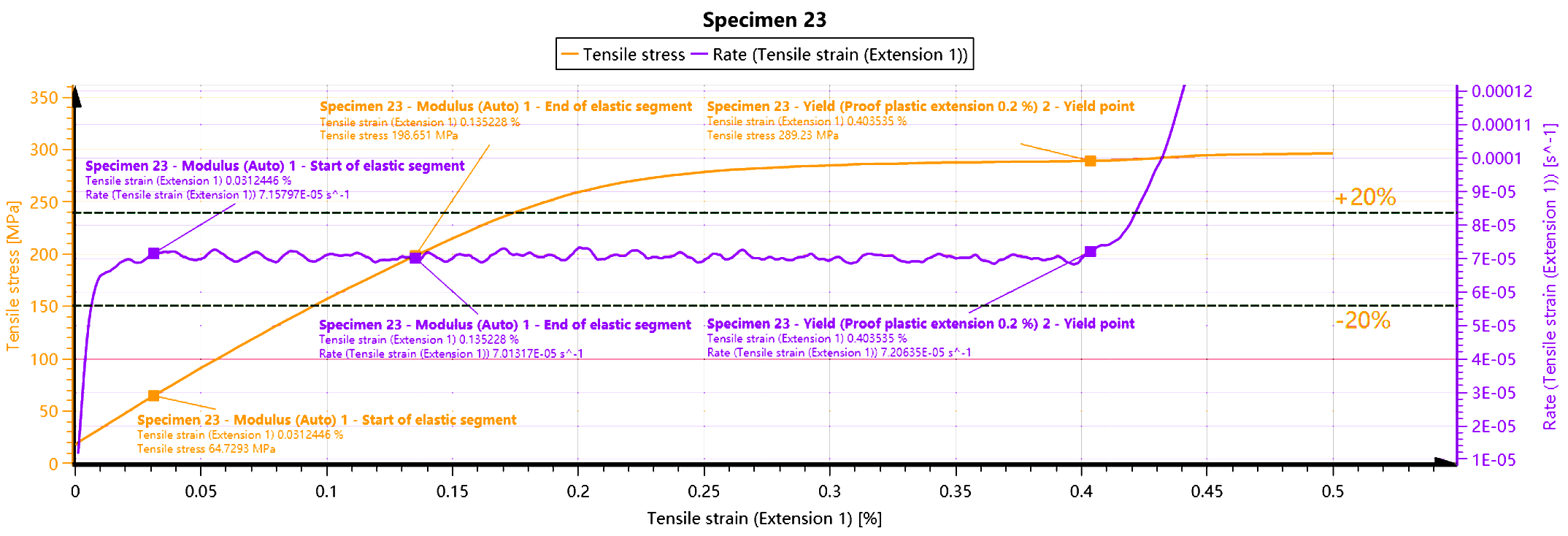
Integrated Control Interfaces
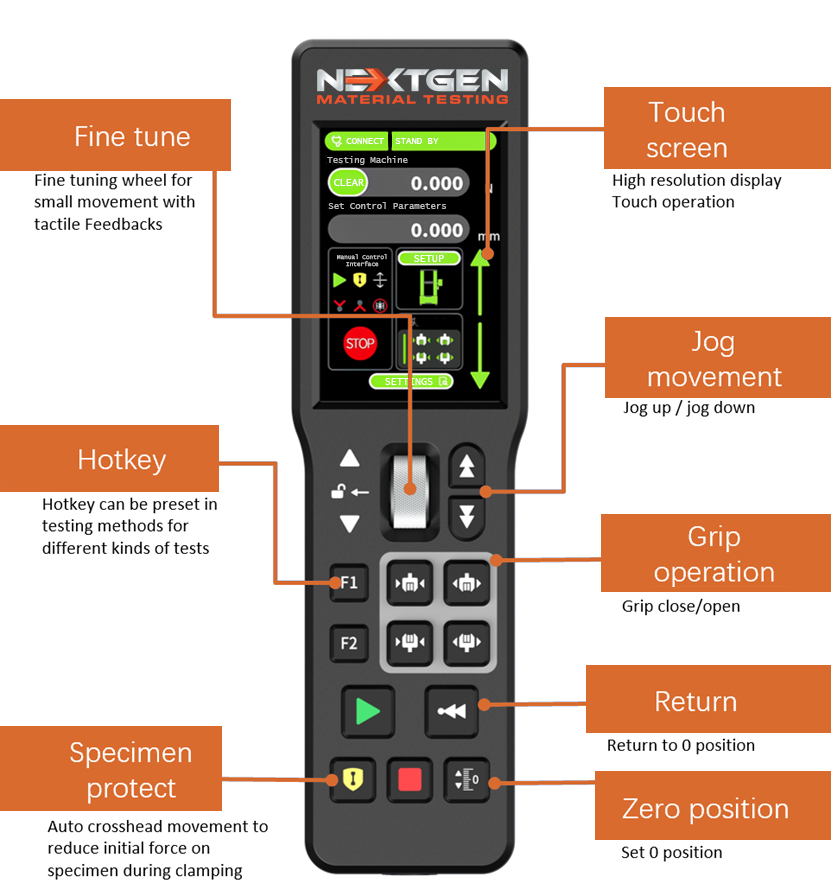
The NG-EML Series D supports local and PC-based control options for setup, positioning, test execution, and system monitoring.
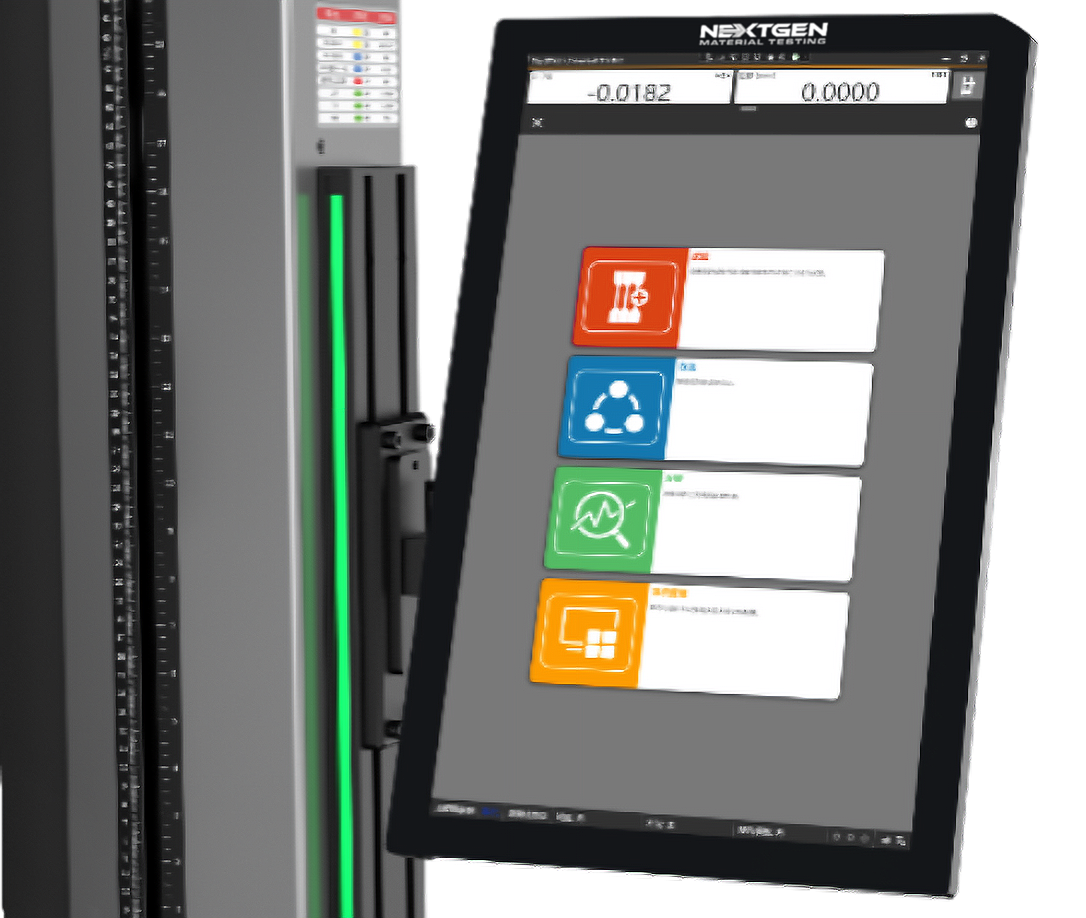
GenTest™ Software
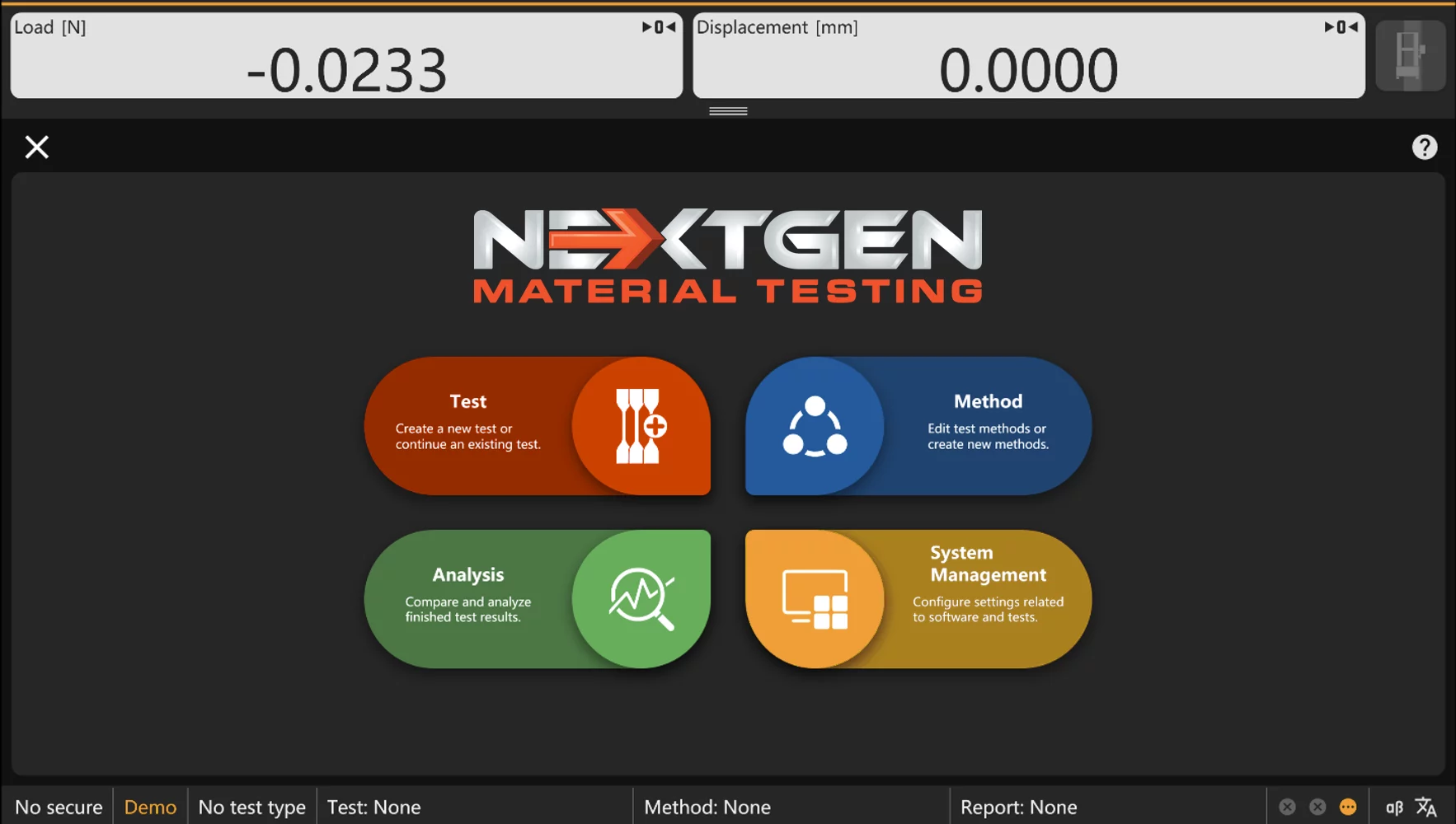
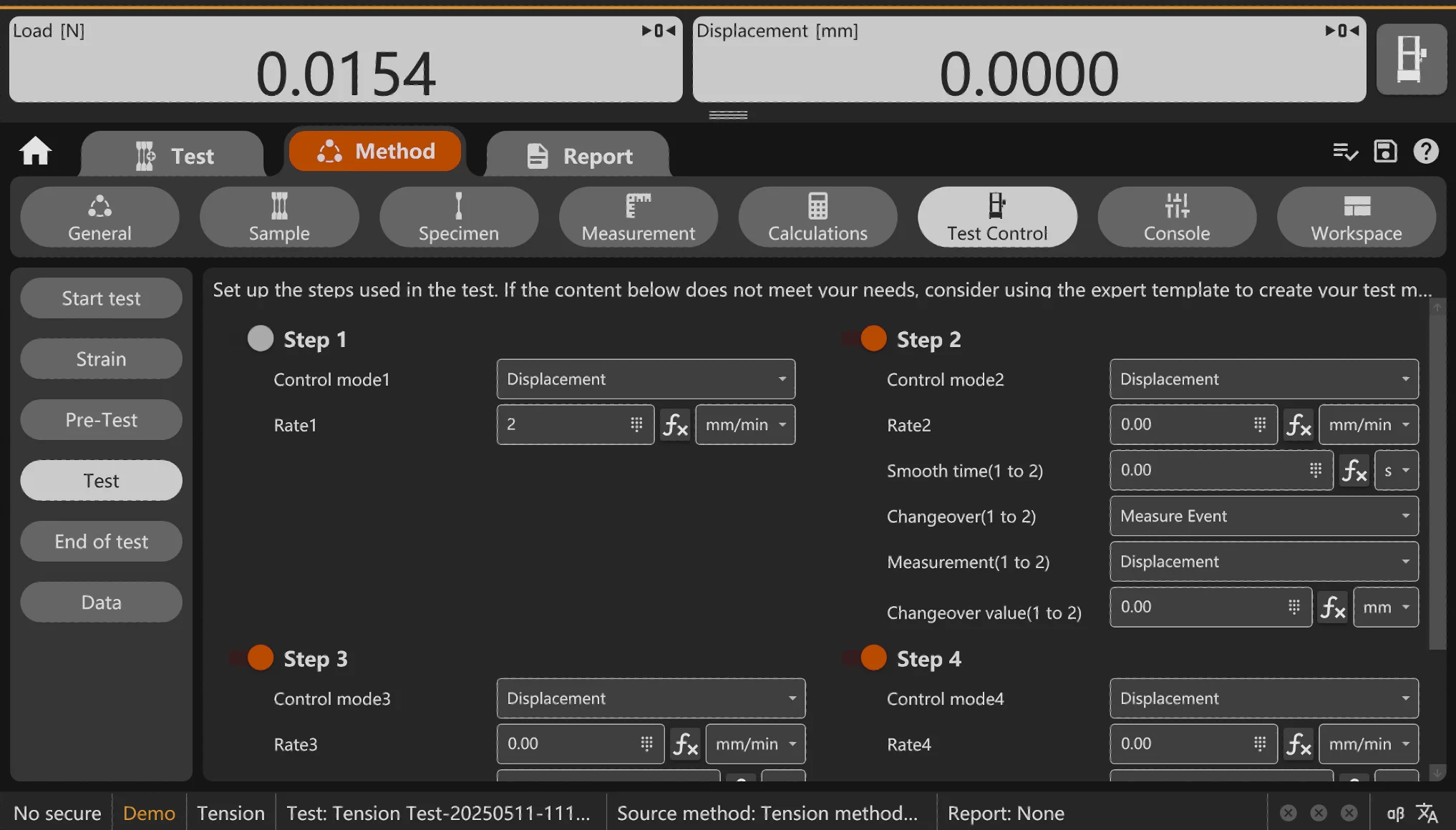
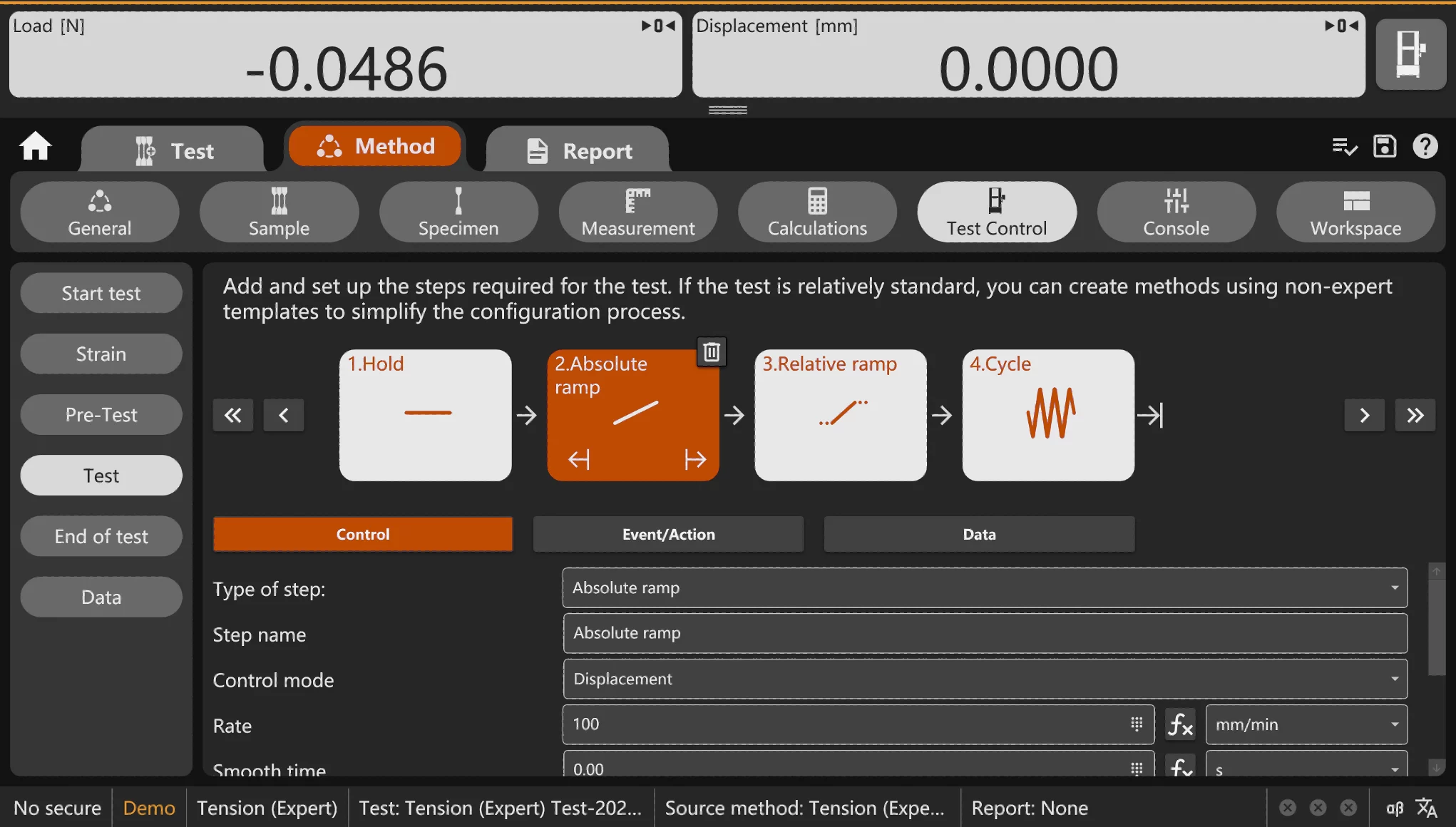
GenTest™ software provides test setup, machine control, live data acquisition, analysis, and reporting for high-force material testing.
Overall Dimensions and Test Space
Machine dimensions depend on the selected kN capacity. Please refer to the tables below for the corresponding values.
NG-EML 50-100 & NG-EML 200-300 Models
| Frame Type | Dimensions (A x B x C) | Crosshead Travel (H) | Test Width (W) | Full Width with Display (A1) |
|---|---|---|---|---|
| Standard (single-space) | 46.3 x 28.0 x 100.4 in (1175 x 710 x 2550 mm) | 53.1 in (1350 mm) | 23.6 in (600 mm) | 65.2 in (1655 mm) |
| Standard (dual-space) | 46.3 x 28.0 x 103.1 in (1175 x 710 x 2620 mm) | 49.2 in (1250 mm) | ||
| Extended 300 mm (single-space) | 46.3 x 28.0 x 112.2 in (1175 x 710 x 2850 mm) | 65.0 in (1650 mm) | ||
| Extended 300 mm (dual-space) | 46.3 x 28.0 x 115.0 in (1175 x 710 x 2920 mm) | 61.0 in (1550 mm) | ||
| Extended 600 mm (single-space) | 46.3 x 28.0 x 124.0 in (1175 x 710 x 3150 mm) | 76.8 in (1950 mm) | ||
| Extended 600 mm (dual-space) | 46.3 x 28.0 x 126.8 in (1175 x 710 x 3220 mm) | 72.8 in (1850 mm) |
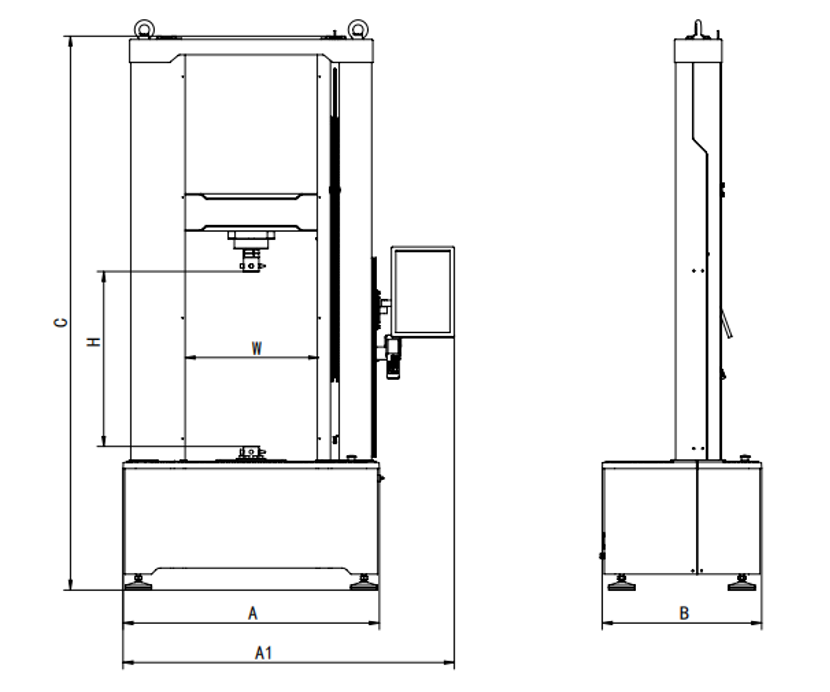
Single-Space Frame Configuration
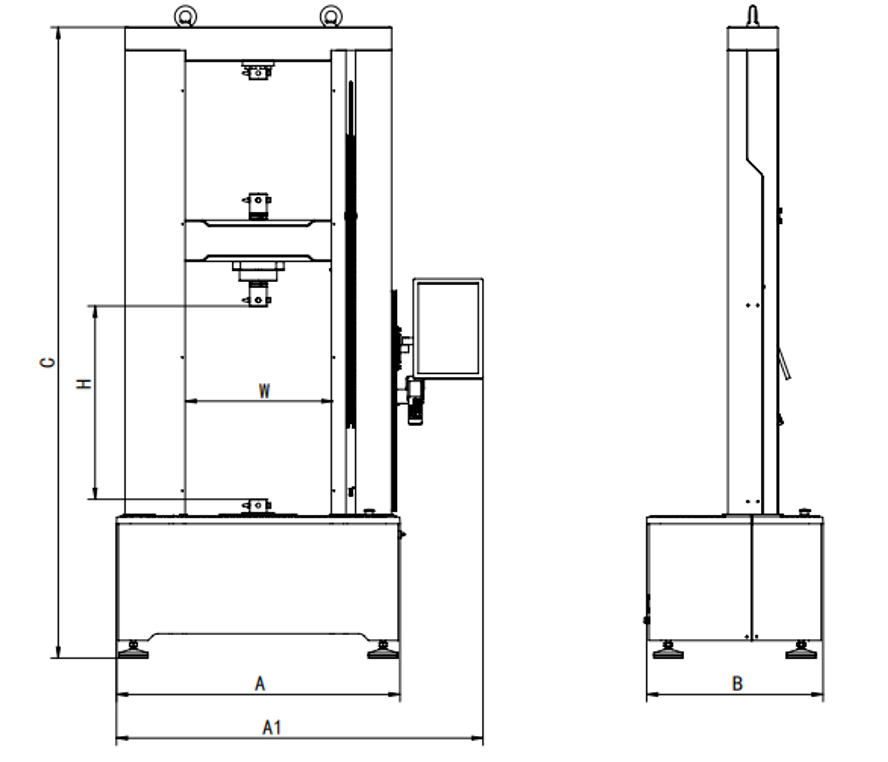
Dual-Space Frame Configuration
NG-EML 500-600 Models
| Frame Type | Dimensions (A x B x C) | Crosshead Travel (H) | Test Width (W) | Full Width with Display (A1) |
|---|---|---|---|---|
| Standard (single-space) | 56.3 x 33.5 x 108.7 in (1430 x 850 x 2760 mm) | 29.5 in (750 mm) | 29.5 in (750 mm) | 90.6 in (2300 mm) |
| Standard (dual-space) | 56.3 x 33.5 x 111.8 in (1430 x 850 x 2840 mm) | 25.6 in (650 mm) | 29.5 in (750 mm) | 90.6 in (2300 mm) |
| Extended 300 mm (single-space) | 56.3 x 33.5 x 120.5 in (1430 x 850 x 3060 mm) | 41.3 in (1050 mm) | 29.5 in (750 mm) | 90.6 in (2300 mm) |
| Extended 300 mm (dual-space) | 56.3 x 33.5 x 123.6 in (1430 x 850 x 3140 mm) | 37.4 in (950 mm) | 29.5 in (750 mm) | 90.6 in (2300 mm) |
NG-EML 1000 Model
| Frame Type | Dimensions (A x B x C) | Crosshead Travel (H) | Test Width (W) | Full Width with Display (A1) |
|---|---|---|---|---|
| Standard (single-space) | 61.8 x 39.4 x 122.0 in (1570 x 1000 x 3100 mm) | 19.7 in (500 mm) | 35.0 in (890 mm) | 96.5 in (2450 mm) |
| Standard (dual-space) | 61.8 x 39.4 x 128.0 in (1570 x 1000 x 3250 mm) | 35.4 in (900 mm) | 35.0 in (890 mm) | 96.5 in (2450 mm) |
| Extended 300 mm (single-space) | 61.8 x 39.4 x 133.9 in (1570 x 1000 x 3400 mm) | 31.5 in (800 mm) | 35.0 in (890 mm) | 96.5 in (2450 mm) |
| Extended 300 mm (dual-space) | 61.8 x 39.4 x 139.8 in (1570 x 1000 x 3550 mm) | 23.6 in (600 mm) | 35.0 in (890 mm) | 96.5 in (2450 mm) |
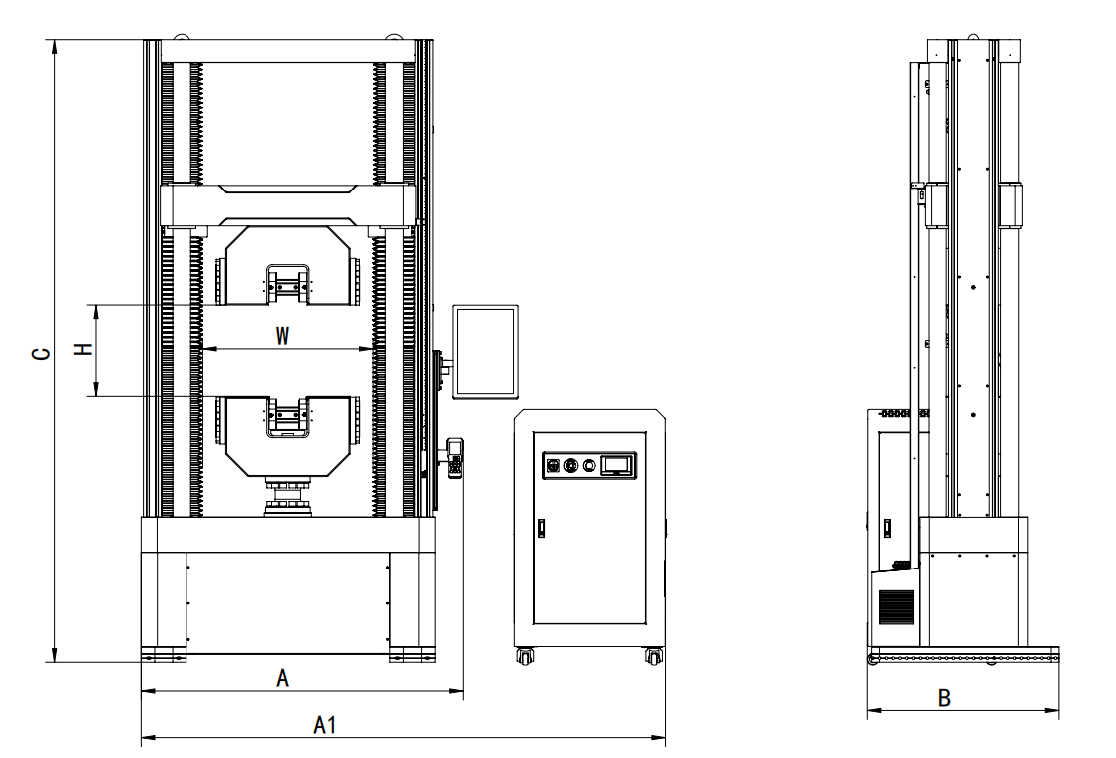
Single-Space Frame Configuration
FAQs
A Series D floor-standing universal testing machine is the right choice when your lab needs higher force, a rigid floor-standing frame, and enough test space for larger specimens or heavier fixtures. We build this platform for 50 kN to 1000 kN tensile, compression, flexural, and cyclic testing, especially for high-strength metals, advanced composites, structural materials, high-temperature alloys, and other demanding applications where stable control under load matters.
It is also the better fit when your method needs more than a basic frame. Single-space, dual-space, and extended-travel configurations let us match specimen length and fixture stack-up, while closed-loop control and GenTest software support force, displacement, strain, and more advanced test routines.
If you’re evaluating different configuration options, learn more or request a quote. If you share your force range, specimen geometry, and test method, we can help narrow the right frame, test space, and accessory setup.
This floor-standing UTM is built for high-force testing of high-strength metals, advanced composites, high-temperature alloys, and other structural materials. It is also well suited for engineering plastics, reinforced composites, rubber, elastomers, soft polymers, and metal sheet, rod, or wire specimens when the application calls for higher loads, larger samples, cyclic loading, or elevated-temperature work.
The right material fit depends on the full test setup, including force capacity, load cell, grips, strain measurement, and whether you need tensile, compression, flexural, or cyclic testing. We can also configure the system with compatible grips and fixtures to match your specimen geometry and test method.
Need to verify the best setup for your material and specimen type? learn more or request a quote, and we’ll help match the frame, grips, and measurement options to your application.
Our floor-standing Series D range is available in 50, 100, 200, 300, 500, 600, and 1000 kN capacities. That gives you a broad span for high-force universal testing, from routine metal tensile and compression work through larger specimens and more demanding structural material testing.
The best capacity depends on your expected peak load, specimen geometry, fixture requirements, and whether your setup needs a single-space or dual-space configuration. If your application is below this range, the NG-EML Series C is the lower-force alternative.
If you’re sizing a machine for a specific test method, learn more or request a quote, and we’ll help match the right force capacity, test space, and grips to your application.
Crosshead travel and test width on this floor-standing universal testing machine vary by capacity group and frame configuration. Our 50 to 300 kN models use a 600 mm test width, the 500 to 600 kN models use a 750 mm test width, and the 1000 kN model uses an 890 mm test width. Crosshead travel then changes based on whether you choose a single-space, dual-space, or extended-travel frame.
For 50 to 300 kN, available crosshead travel options are 1350, 1250, 1650, 1550, 1950, and 1850 mm. For 500 to 600 kN, the available travel options are 750, 650, 1050, and 950 mm. For 1000 kN, the available travel options are 500, 900, 800, and 600 mm. This is why capacity alone is not enough when sizing the frame for long specimens, larger fixtures, or specific tensile and compression setups.
If you're evaluating different configuration options, learn more or request a quote. If you share your specimen length, grip setup, and test method, we can help match the right frame and travel configuration.
We offer this floor-standing universal testing machine in single-space and dual-space frame layouts, with extended-travel versions available when your setup needs more vertical clearance for longer specimens, larger fixtures, or specialized test methods. That gives you a practical way to match the frame to tensile, compression, flexural, cyclic, and other high-force material testing workflows.
Configuration options also vary by capacity. The 50 to 300 kN models are available in standard, extended 300 mm, and extended 600 mm versions, each in single-space or dual-space formats. The 500 to 600 kN and 1000 kN models are offered in standard and extended 300 mm versions, again in single-space or dual-space layouts. Selection usually comes down to specimen length, fixture stack height, and the grips and fixtures required for the method.
If you’re evaluating different configuration options, learn more or request a quote. Share your specimen geometry, travel needs, and test method, and we’ll help match the right frame setup.
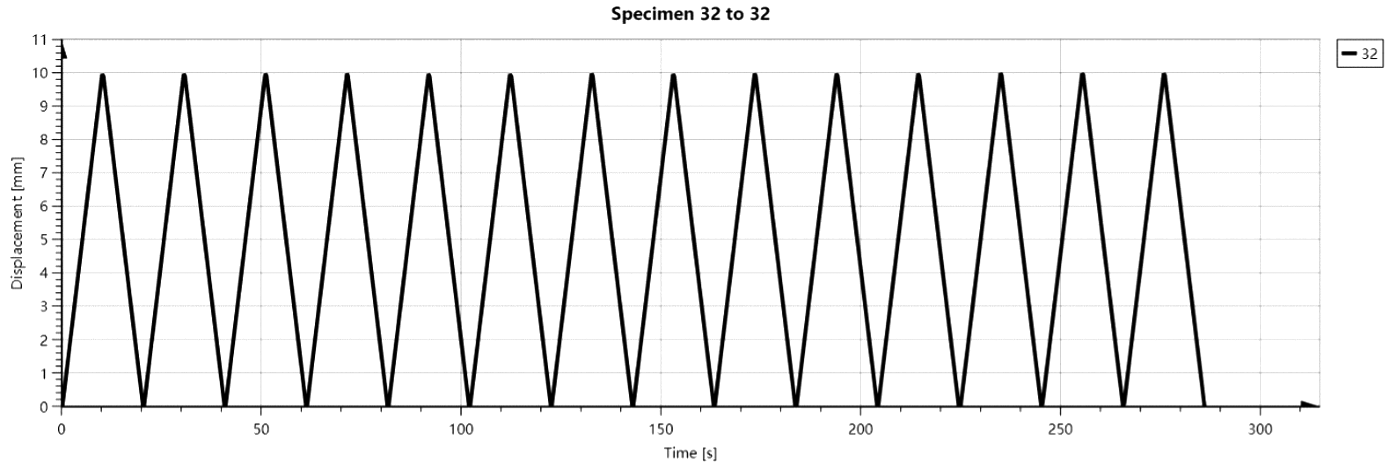
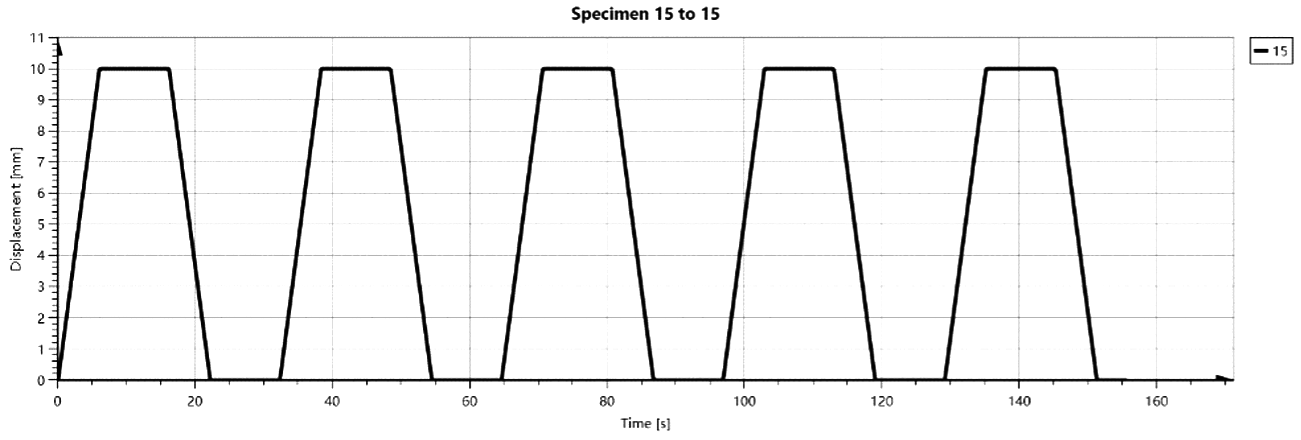
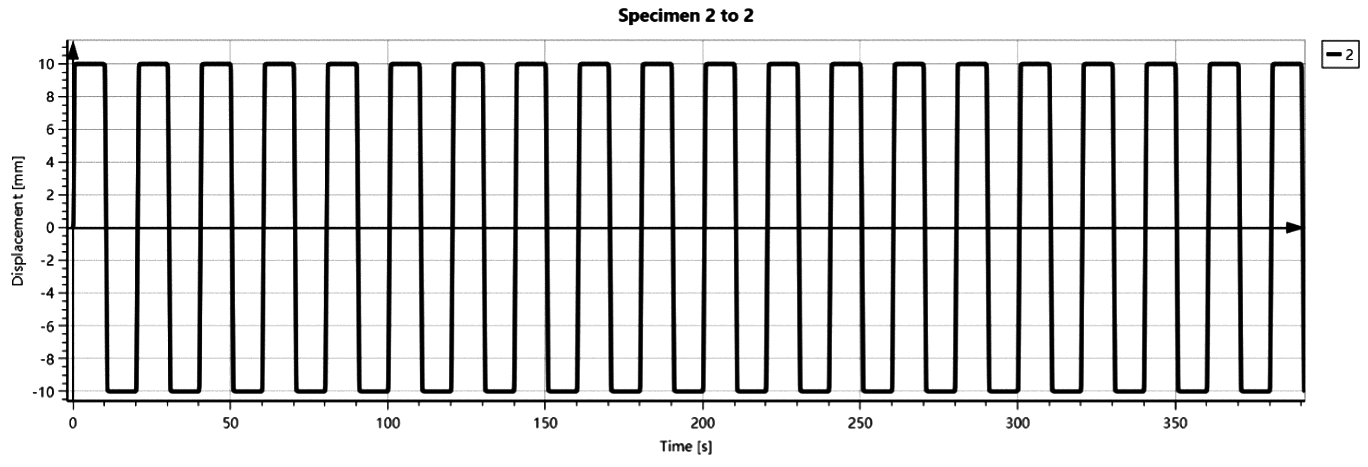
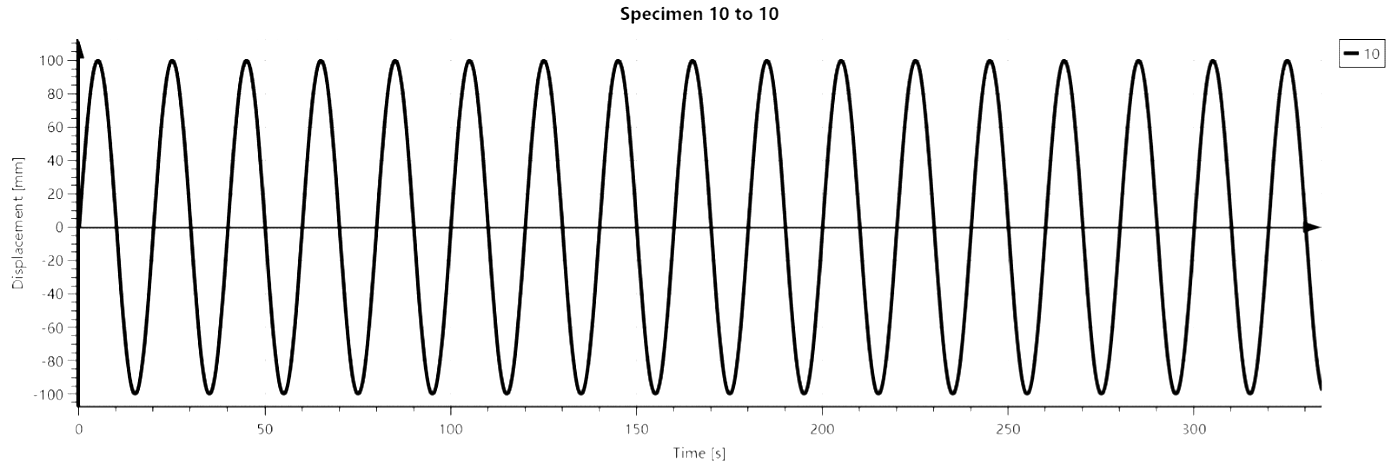
This system supports cyclic and waveform-driven test procedures. Its closed-loop controller can generate sine and trapezoidal waveforms, and the machine is built for tensile, compression, flexural, and cyclic testing in higher-force applications.
For waveform-driven material testing, the exact setup is usually defined by the control mode, specimen behavior, and the sensors or accessories tied into the method. We can configure custom sequences in GenTest using ramp, hold, waveform, and trigger-based actions, while monitoring force, displacement, strain, time, and active test steps during the run.
To align cyclic testing with your method, learn more about this platform or request a quote with your target load range, waveform type, and control requirements.
This system is built for tensile, compression, flexural, and cyclic testing. For high-force materials work, that covers the core test modes most labs need for metals, composites, structural materials, and other demanding applications. The frame and control architecture also support force, displacement, and strain-based control, so the machine can be matched to the method rather than forcing a one-size-fits-all setup.
With GenTest software, the NG-EML Series D can also run custom procedures using ramp, hold, waveform, and trigger-based sequence steps. The exact test setup is typically defined by the specimen geometry, load range, grips or fixtures, and whether you need standard tensile or compression work, flexural testing, or more advanced cyclic routines.
To align this with your testing method, learn more about the platform and review compatible grips and fixtures. If you can share your material, specimen geometry, or test standard, we can help define the right setup through a request a quote.
Closed-loop control manages force, displacement, and strain by reading live feedback from the load cell, crosshead position encoder, and extensometer, then adjusting drive output in real time to hold the chosen control mode. That lets this universal testing machine correct for specimen yielding, stiffness changes, and grip settling during the test, instead of relying on a fixed motion command alone.
This becomes especially important when a method needs controlled transitions between stages, such as preload, displacement control, strain control, hold segments, creep, relaxation, or cyclic loading. The digital controller synchronizes force, position, and extensometer signals at up to 1200 Hz, and GenTest supports setup, live acquisition, analysis, and reporting for these workflows.
To align this with your testing method, learn more about this system or request a quote. If you share your material, specimen geometry, and target control mode, we can help configure the right sensor and software setup.
This system is built to Accuracy Class 0.5 and provides force resolution of 1/600,000 of full scale. That gives you precise load measurement for high-force tensile, compression, flexural, and related universal testing work.
For selection purposes, the force measurement range is specified as 500 N to 1000 kN from 0.2% to 100% of full scale, and 10 N to 250 N from 0.4% to 100% of full scale. The best setup depends on the frame capacity, load cell configuration, and the force window your test method needs to capture most accurately.
If you’re validating force measurement performance for a specific method, learn more or request a quote. Share your target load range, specimen geometry, and any extensometer or fixture requirements, and we can help match the right configuration.
For force verification, the key standards are ASTM E4 and ISO 7500-1. For metallic tensile testing, the main standards are ASTM E8 and ISO 6892-1. This universal testing machine is built for those testing frameworks, with calibration references that also include GB/T 16825.1.
If your metallic tensile program includes strain measurement or elevated-temperature work, the applicable setup may also involve ASTM E21 and GB/T 228, depending on the method, extensometer, grips, and specimen requirements. The exact configuration should match the standard you need to run, especially for load cell selection, strain measurement, and fixture choice.
To align this with your testing method, review the NG-EML Series D and request a quote for the right calibration, grips, extensometer, and documentation package.
GenTest™ includes preloaded method templates across ASTM, ISO, EN, and GB/T frameworks for this floor-standing universal testing machine. The library is organized by test type, so operators can quickly load setups for tensile, compression, flexural, cyclic, and custom procedures instead of building each method from scratch.
For the NG-EML Series D, common templates align with methods used for metal, plastic, rubber, and high-temperature testing, including ASTM E8, ASTM E21, ASTM D638, ASTM D412, ISO 6892-1, ISO 527, ISO 604, ISO 37, ISO 1184, and GB/T 228. EN templates are also available within GenTest, and the exact method set used on your machine is typically matched to the specimen geometry, control mode, sensors, and fixture package.
To align this with your testing method, learn more about the NG-EML Series D or request a quote for the right software, fixtures, and sensor package. If you share your standard and specimen details, we can match the template library to your application.
Plan around the selected frame size, because the footprint and overall height change with capacity and frame layout. Across this floor-standing universal testing machine range, the base dimensions run from 46.3 x 28.0 in up to 61.8 x 39.4 in, and overall height runs from 100.4 in up to 139.8 in.
The main factors are load capacity, single-space versus dual-space construction, and whether you choose an extended-travel version for longer specimens or specialized fixtures. For room planning, also account for the full machine width with the display installed, which ranges from 65.2 in on smaller frames to 96.5 in on the 1000 kN system.
If you’re laying out a new test area, learn more or request a quote, and we can confirm the right capacity, frame style, and travel configuration for your lab.
This universal testing machine is set up for 3-phase AC, 220 V ±10%, 50/60 Hz installation. Power requirement varies by frame capacity within the Series D range, with listed machine power ratings from 2 kW up to 11 kW.
For installation planning, the main items to verify are the selected load capacity, any added accessories or fixtures, and your site’s available 3-phase service. Matching the machine to the correct facility power connection up front helps avoid delays during delivery, setup, and commissioning.
Need to confirm the right electrical setup for your system? learn more or request a quote, and we can align the configuration with your facility power and testing requirements.
The NG-EML line is separated mainly by frame style, force range, and the kinds of samples each machine is built to handle. Series A is our compact single-column benchtop system for low-force testing, from 50 N to 5 kN. Series B stays benchtop but uses a dual-column frame and covers 100 N to 10 kN, which is a better fit when you need more frame rigidity and capacity. Series C moves into medium-force dual-column testing from 5 kN to 50 kN, with bench-top and floor-standing configurations available. Series D is our heavy-duty floor-standing platform, covering 50 kN to 1000 kN for high-strength metals, structural materials, composites, cyclic testing, and larger specimens.
If your work is mostly small, low-force, and space-limited, Series A or B is usually the right starting point. If you need more capacity, more test space, or room for larger fixtures and specimens, Series C or D is the better path. The practical break point is not just load capacity, but also specimen size, grip style, extensometry, and whether the application calls for a benchtop frame or a floor-standing system.
If you’re evaluating different configuration options, learn more about Series D or request a quote with your material, specimen geometry, target load range, and test method. We can help match the right NG-EML frame to your application.
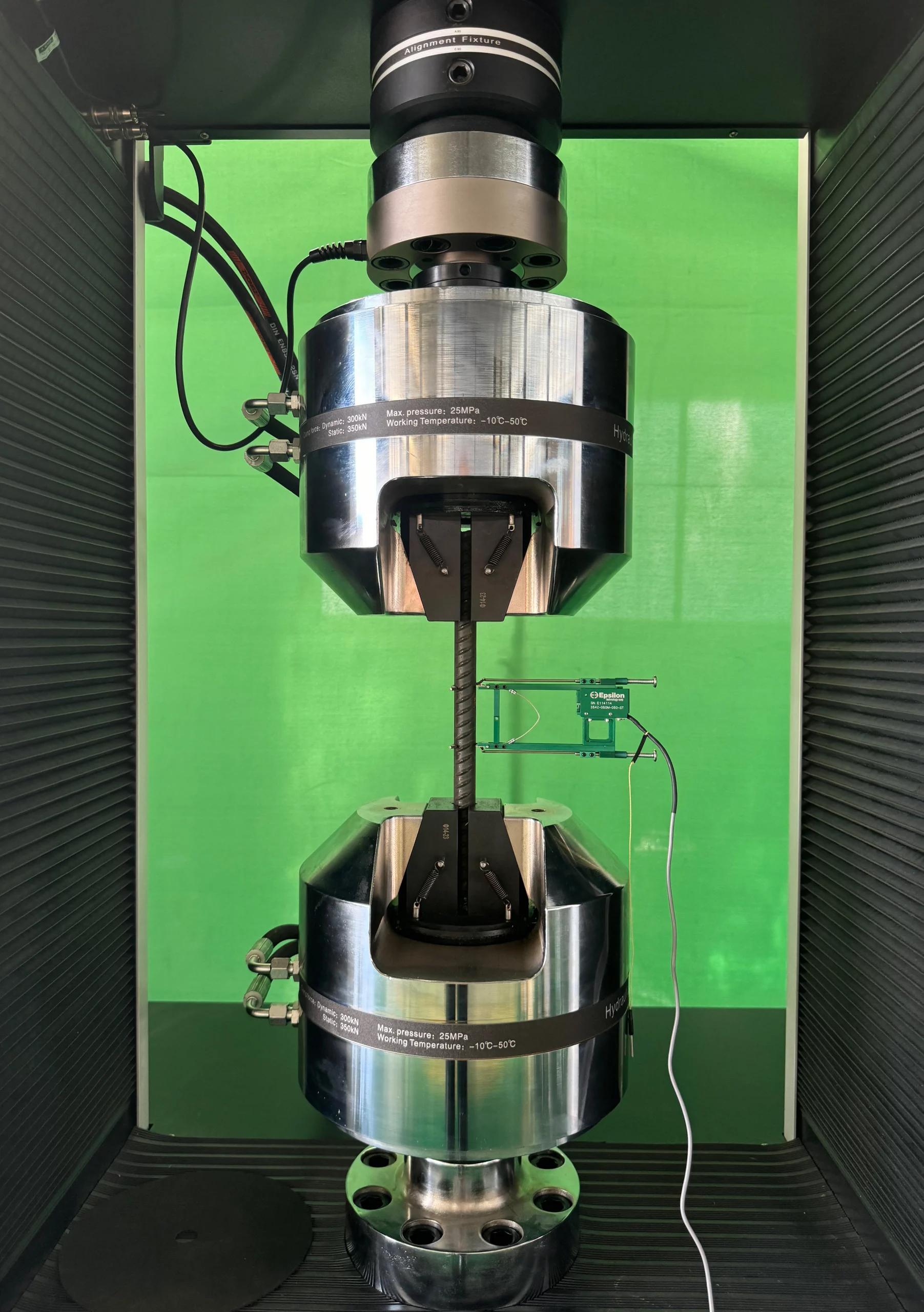
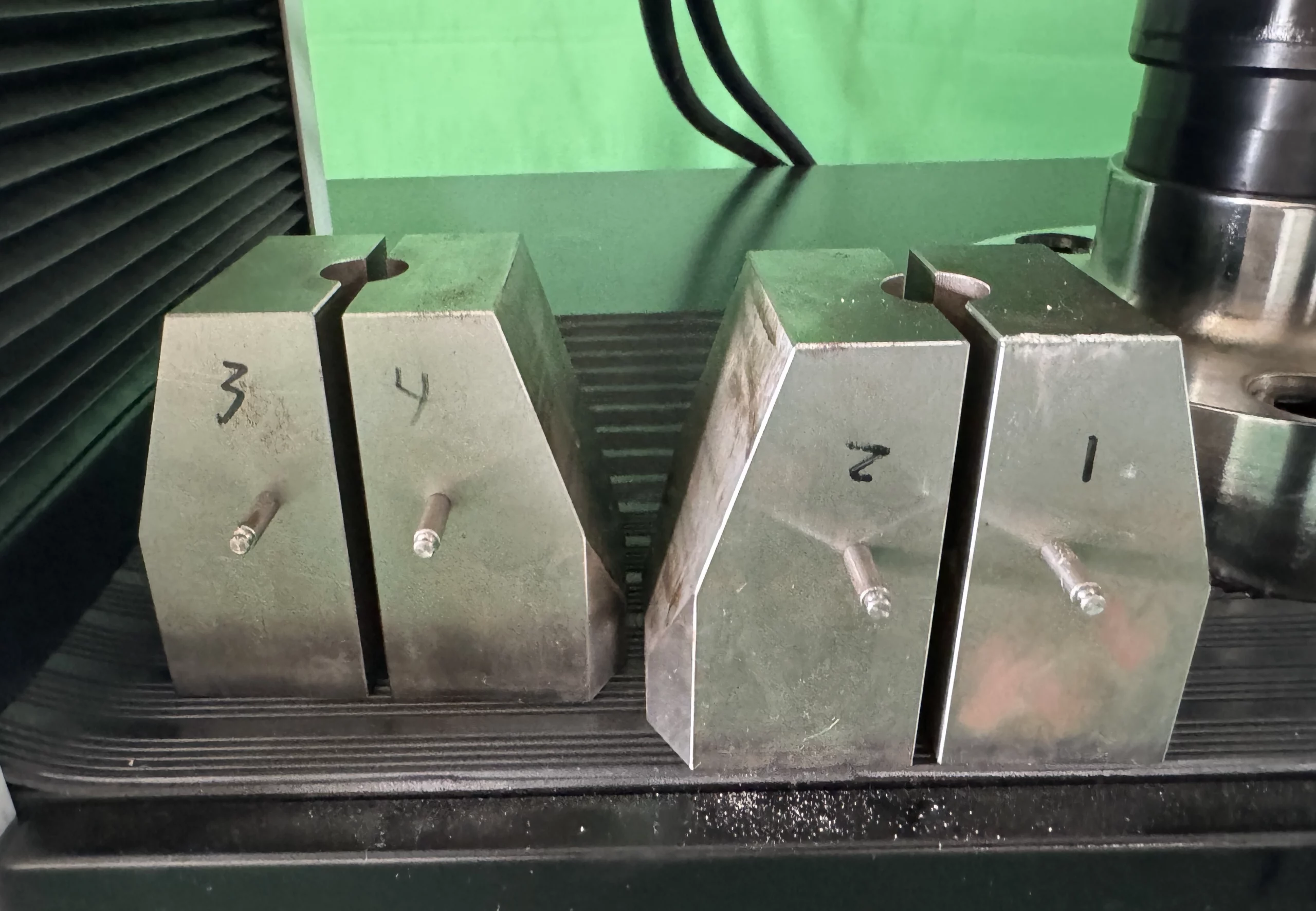
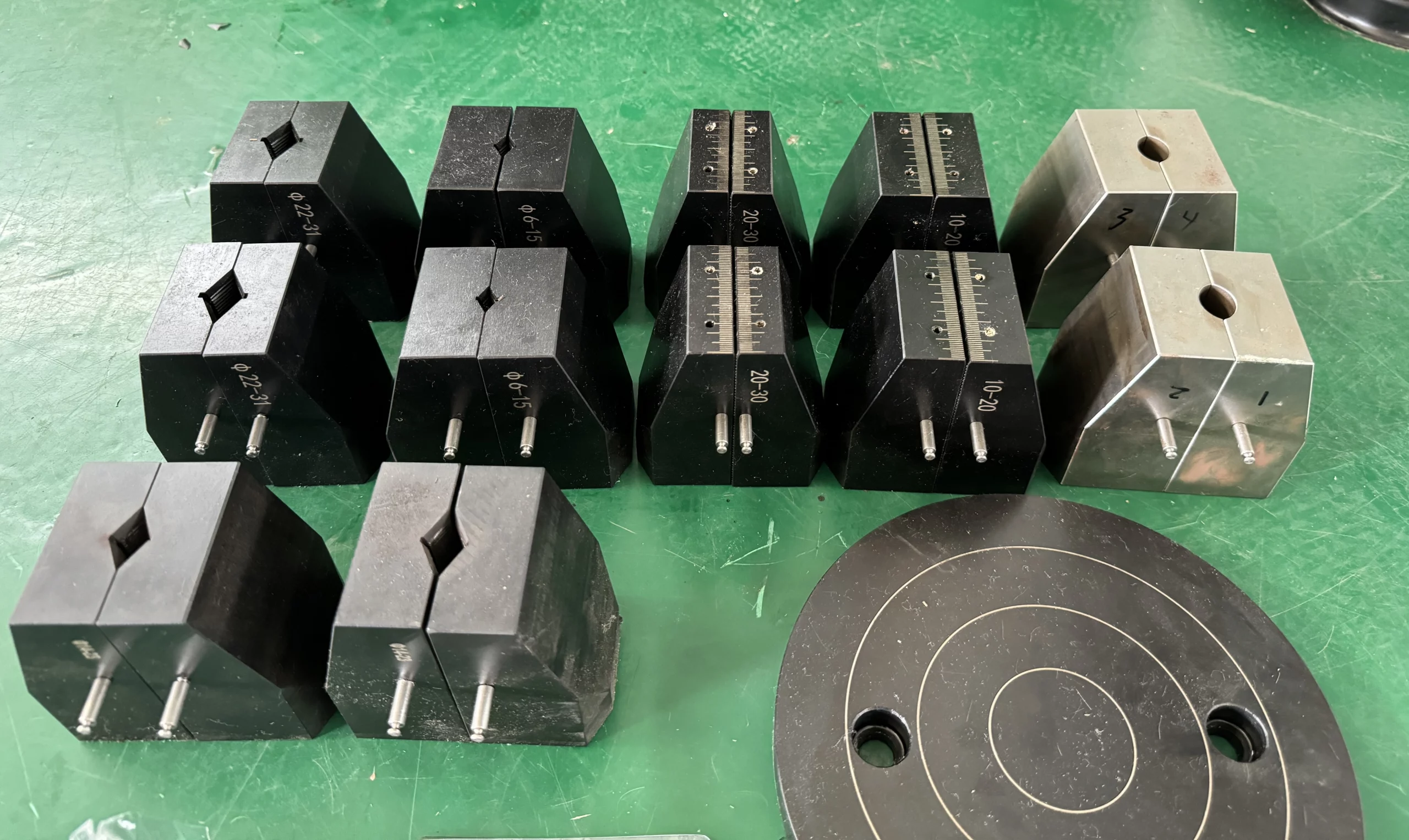
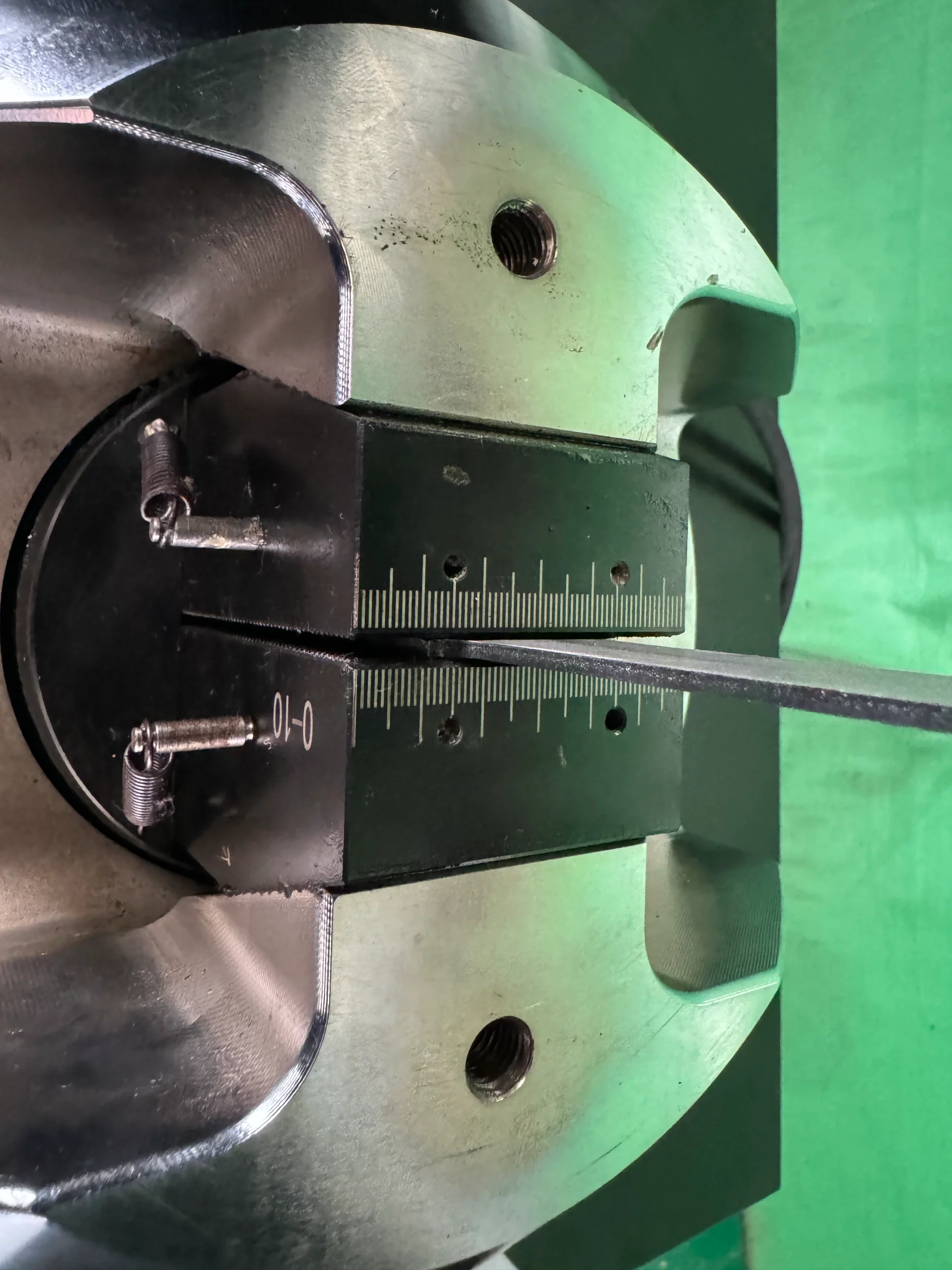
This system supports a broad range of grips and fixtures for tensile, compression, flexural, shear, peel, puncture, and other specialized tests. Common options for NG-EML Series D machines include wedge grips for high-load metal and composite testing, pneumatic grips for fast repeatable clamping, side-action grips with interchangeable jaw faces, self-tightening and eccentric roller grips, 3-point and 4-point bending fixtures, compression platens and cages, snubbing grips for wire and cable testing, threaded grips for fastener testing, and other application-specific fixtures.
The right combination depends on your force range, specimen geometry, test method, and frame configuration. For metal tensile testing, wedge grips are often the best starting point. For softer or more delicate samples, pneumatic or side-action gripping may be the better fit. This platform also supports integration with extensometers, thermal chambers, and pneumatic grip control when your method requires strain measurement, temperature control, or automated fixture pressure.
Need to confirm the best setup for your samples and test method? learn more or request a quote, and we can match the frame, grip style, jaw faces, and accessories to your application.
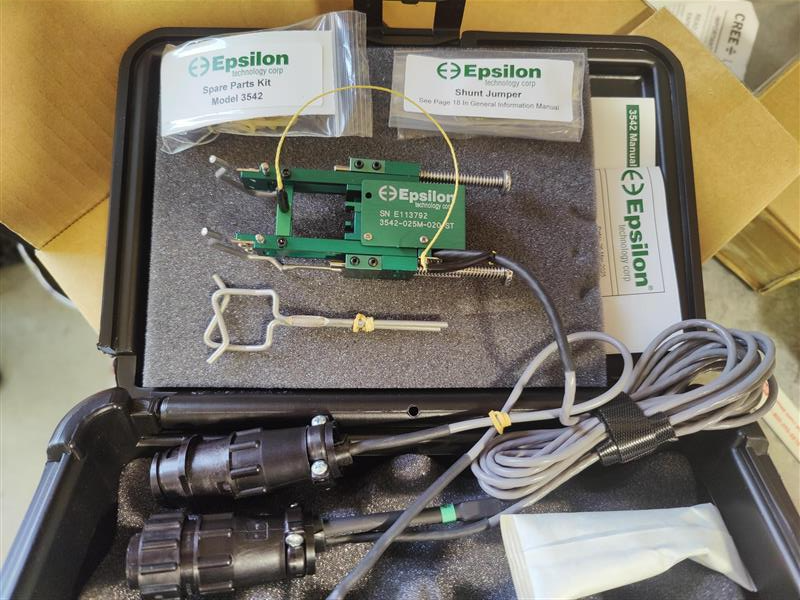
This system supports compatible extensometers, video extensometers, and environmental chambers. Its control platform is designed to manage force, displacement, strain, and accessory signals together, so strain measurement and chamber-based testing can be integrated into the same test workflow.
The best setup depends on your test method, specimen geometry, strain range, and temperature requirements. Through GenTest, compatible extensometers and chamber controls can be tied to the test sequence, which helps when you need coordinated control of strain inputs and test conditions.
If you're evaluating accessory compatibility for your method, learn more or request a quote with your specimen type, strain measurement approach, and chamber requirements.
Operators can export both raw data and processed test results from this universal testing machine through our GenTest software workflow. The system supports live data acquisition, automatic calculations, post-test recalculation, batch comparison, and report generation, so your team can move from test execution to documented results without rebuilding the dataset outside the machine software.
That export workflow is useful for tensile, compression, and other UTM applications where you need both traceable raw files and finished reports. Depending on your setup, operators can review graphs, result fields, and sequence controls directly at the machine, and export options can include formats such as Excel, PDF, CSV, and image files. USB connectivity also supports data export and common peripherals such as printers and barcode scanners.
To align this with your reporting workflow, you can learn more about this system or review GenTest. If you want to confirm the right software, report format, or export setup for your lab, request a quote.
GenTest handles test setup through a method-based workflow. On this universal testing machine, the selected method ties together control steps, operator inputs, live channels, calculations, and the final report, so setup and reporting stay consistent inside one test record. For routine work, the software includes ready-made libraries for common ASTM, ISO, EN, and GB/T workflows, and it also lets you build custom sequences for application-specific tensile, compression, flexural, cyclic, and other material tests.
Reporting is built into the same workflow. GenTest can generate standardized reports with graphs, tables, and selected result fields, then export data in formats such as PDF, Excel, CSV, and raw data files. User roles, stored test records, and linked metadata also help maintain traceability across operators, batches, and QA documentation.
To align this with your testing method, you can learn more about the NG-EML Series D, review GenTest, or request a quote for a setup matched to your specimen type, test sequence, and reporting requirements.
An optional safety shield can be added to this universal testing machine for specimen failure protection. For the NG-EML Series D, the shield is configured as an enclosed aluminum and polycarbonate guard with a door-locking feature and a software-linked interlock, so machine movement is restricted when the shield is open.
This is a strong option for high-force tensile testing and other applications where sudden specimen breakage is a concern. Shield selection should be matched to the machine capacity, specimen size, travel requirements, and the grips or fixtures being used. The frame also includes built-in protection features such as collision detection, overload protection, travel limits, and emergency stop logic.
If you're configuring this system for high-energy specimen testing, learn more or request a quote. If you share your specimen geometry, force range, and fixture setup, we can help match the right shielded configuration.
Our high-force testing systems include layered hardware and software safety protections to control risk during setup and during the test itself. On the NG-EML Series D, that includes real-time collision detection, 103% overload protection, mechanical travel limits, software-defined stroke limits, and an emergency stop circuit. Force, displacement, and extensometer channels are also monitored so the machine stays within calibrated operating ranges.
For day-to-day operation, the handheld controller adds grip lockout, overload prevention, and return-to-origin functions to reduce setup errors and unintended movement. Where added operator containment is needed, we can also supply an enclosed aluminum and polycarbonate safety shield with a door-locking mechanism and software interlock. The right safety package depends on test force, specimen behavior, and the grips and fixtures used for the method.
To align the safety setup with your testing method, learn more about this frame or request a quote. If you share your material, specimen geometry, and required force range, we can help define the right shielding, controls, and fixture configuration.
Labs should plan routine maintenance around the frame and test space, gripping hardware, measurement devices, and safety checks. That usually means keeping the columns and crosshead area clean, inspecting grip faces and fixtures for wear, verifying load and displacement channels, and testing limit switches, overload protection, and the emergency stop.
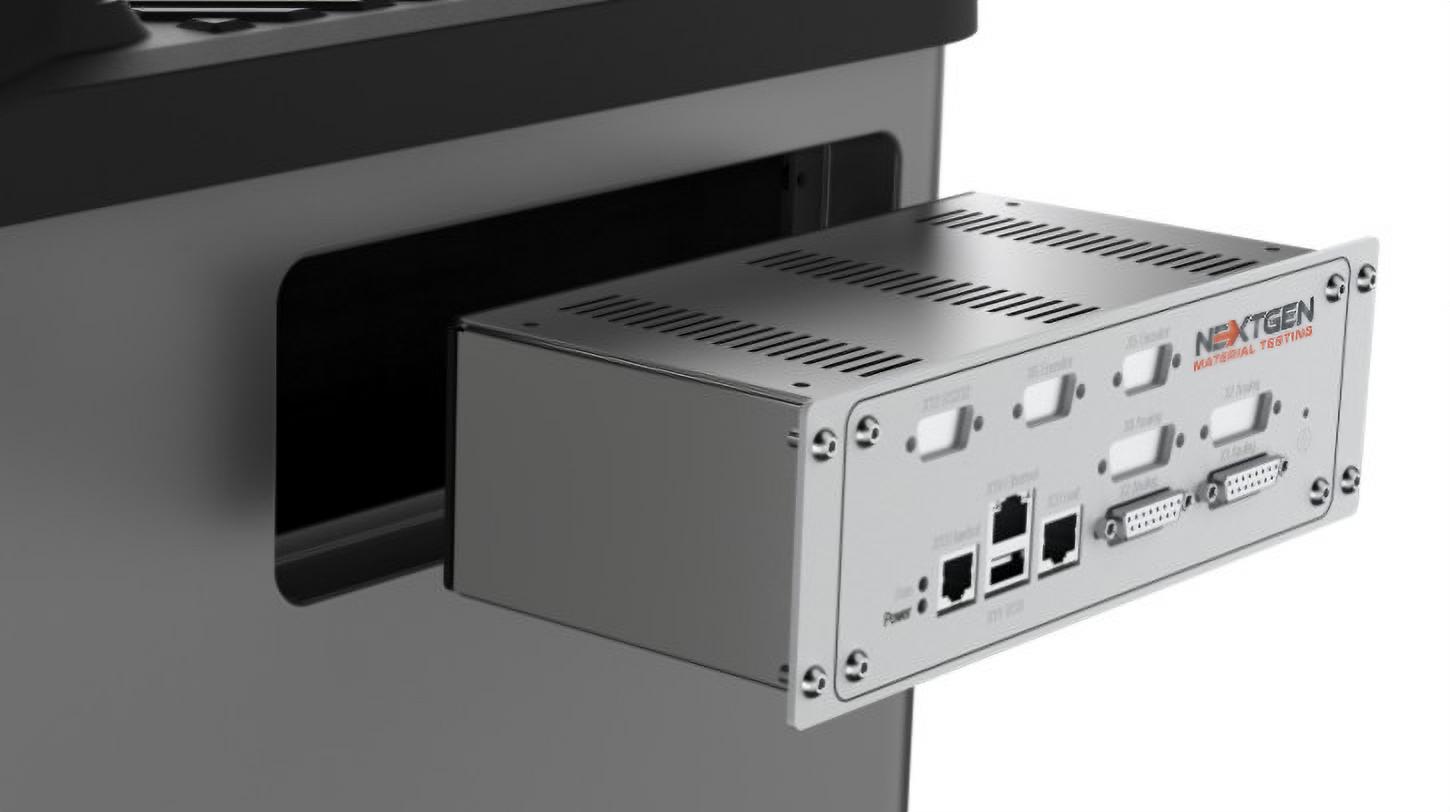
The exact checklist depends on your frame configuration, specimen types, fixtures, and whether you are using extensometers or other connected devices. On this system, service access is simplified by a pull-out controller module and removable covers for inspection of belts, motors, sensors, and electronics. The frame also uses self-lubricating linear guides, so maintenance is usually centered on cleanliness, motion quality, alignment, cable condition, and scheduled calibration. If your setup changes often, include regular checks of grips and fixtures as part of the plan.
To align this with your testing method, learn more about this system or request a quote. If you share your materials, fixtures, and sensor setup, we can help define the right preventive maintenance scope.
Calibration and force verification are handled as part of the machine setup and ongoing service plan. We support NG-EML Series D systems with professional calibration of the force measurement system, along with displacement and extensometer checks, so the machine stays aligned with ASTM E4 and ISO 7500-1 requirements. This platform also uses calibrated load cells, supports built-in verification functions, and is specified to Accuracy Class 0.5 within its configured force range.
For most labs, verification is completed at installation and then repeated annually, or on the interval required by the quality system, audit schedule, or test method. We issue traceable calibration certificates, and we can coordinate calibration with installation, operational checks, and operator training so the system is ready for production testing or lab work.
To align this with your testing method, learn more or request a quote. If you share your capacity, load cell setup, and verification standard, we can help define the right calibration plan.
We provide operator training and installation support for this floor-standing UTM. For the NG-EML Series D, we can set up training so your team can learn safe operation, basic software use, and routine system handling on the supplied machine. The platform also uses guided control software and a handheld controller, which helps shorten the learning curve for new operators.
Basic system and software training is structured for up to three operators. It covers safety, major system components, startup and shutdown, fixture and accessory handling, and an introduction to the control software. Our installation scope also includes system setup, physical and electrical connections, mounting supplied fixtures and transducers, and checking correct operation before handoff.
If you are planning a new installation or adding operators, learn more or request a quote. If you share your test methods, accessories, and operator count, we can help scope the right training approach for your lab.
After installation, this universal testing machine is supported for the life of the system. We provide ongoing remote technical support for troubleshooting, software guidance, and general service questions, and if hands-on help is needed, we coordinate certified local service partners for on-site assistance.
Your long-term coverage also includes a detailed warranty package, with a minimum 12-month warranty on the instrument, plus ongoing support for spare parts and accessories over the life of the system. During installation and startup, we also provide operator training and technical documentation so your team can run the machine confidently and maintain continuity in daily testing. Consumables are handled separately.
If you want to plan the right support path for your lab, learn more about this system or contact us to discuss service, training, or troubleshooting for your exact setup.
We keep spare parts and consumables available for NG-EML Series D systems so you can maintain uptime and replace common wear items without unnecessary delay. Coverage includes grips, extensometer accessories, load cells, bearings, belts, seals, and electronic modules used across NG-EML UTM platforms.
For higher-wear items, we can support planned reorders for lab stock. The frame is also designed for easier service access, with a pull-out controller module and removable covers that simplify inspection of belts, motors, sensors, and electronics. If you need application-specific replacement tooling, we also offer grips and fixtures for common UTM test methods.
If you are matching replacement parts to an existing machine, learn more or request a quote with your machine capacity, grips, and accessory package so we can line up the correct parts for your system.
NextGen Material Testing offers a comprehensive range of high-precision grips and fixtures specifically designed for use with NG-EML Series Universal Testing Machines. These accessories enable accurate and repeatable tensile, compression, flexural, shear, peel, and puncture testing across a wide range of materials, including metals, plastics, composites, rubber, and wood.
The available solutions include:
- Wedge grips for high-load metal and composite testing (ASTM E8, ISO 6892)
- Pneumatic grips for fast, repeatable clamping of soft and flexible specimens
- Side-action grips with interchangeable jaw faces for general-purpose applications
- Self-tightening and eccentric roller grips for deformable or low-friction materials
- Flexural fixtures for 3-point and 4-point bending (ASTM D790, C393, D6272)
- Compression platens and cages for ASTM D695 and other compression tests
- Snubbing grips for cable and wire testing using the capstan method
- Threaded grips for bolt and nut tensile verification (ASTM F606)
- Specialized fixtures for tear, peel, puncture, delamination, and wood testing (ASTM D143, D2344, D3167, etc.)
Each fixture is engineered for optimal load alignment, high-strength durability, and full compliance with ASTM, ISO, and other global testing standards. From basic clamping to advanced high-capacity or component-specific testing, these fixtures are designed to support consistent performance across all NG-EML Series UTM configurations.
Yes, NextGen Material Testing Inc. offers professional calibration services for all NG-EML Series Universal Testing Machines, including Series A, B, C, and D. These services are designed to maintain compliance with international standards such as ASTM E4, ISO 7500-1, ASTM E8, and ISO/IEC 17025:2017.
As a general industry requirement, universal testing machines must be calibrated annually to ensure ongoing accuracy and traceability. Our calibration services are performed by certified technicians and qualified engineers, either during initial installation or as part of routine equipment servicing.
Calibration includes:
- Verification of force measurement systems
- Accuracy checks of extensometers and displacement systems
- Issuance of traceable calibration certificates aligned with ASTM and ISO standards
Alongside calibration, we also provide on-site installation and training, including system setup, mechanical and electrical checks, operational testing, and software introduction for up to three users.
Yes, all NG-EML Series UTMs from NextGen Material Testing Inc. are designed to comply with key international standards, including ASTM E4, ISO 7500-1, ASTM E8, and ISO 6892. These standards ensure that the systems meet the highest levels of accuracy, repeatability, and reliability for force measurement and material testing.
Additionally, NextGen offers full certification and calibration services for both in-house and third-party testing equipment. We work closely with ISO/IEC 17025:2017-accredited partners to support certification under a wide range of international standards such as:
-
ASTM E4 – Force verification for universal testing machines
-
ISO 7500-1 – Verification of force-measuring systems in tension/compression testing
-
ASTM E83 and ISO 9513 – Calibration of extensometers and strain measurement devices
-
ASTM E1012 – Alignment verification for load frames
-
ANSI/NCSL Z540-1-1994 – Calibration system accuracy and traceability
-
NADCAP – For aerospace/defense sector certification (with alignment fixtures available to meet NASM 1312B and ASTM E1012 coaxiality requirements)
All NG-EML Series machines are powered by GenTest™ – an advanced data acquisition and control software platform engineered for precision mechanical testing across a wide range of materials and applications.
Key features include:
-
Preloaded test methods compliant with ASTM, ISO, GB/T, EN, and DIN standards, organized by application type for quick selection
-
A modern, intuitive interface with real-time graphing, live data acquisition, and streamlined navigation for both new and experienced users
-
Advanced analysis tools, such as recalculation, zoomable charts, curve overlays, and multi-batch comparisons
-
Full support for modular accessories, including extensometers, thermal chambers, strain sensors, and pneumatic grips
-
Customizable test reports, automated result calculations, and export options in Excel, PDF, CSV, and image formats
-
Real-time sample protection logic, voice-guided testing prompts, multilingual support, and remote demonstration mode
-
Integrated expression builders, step-based sequencing, waveform generation (e.g., ramp, hold, sine), and automated fixture control
GenTest makes sure that all NG-EML models are fully compliant, easy to use, and give accurate data output, whether they are used in quality control labs or research and development settings.
If you would like to learn more about this software, please visit the official GenTest™ software page.
Yes — NG‑EML Series machines are supported by a robust stocked consumables and spare parts program designed for maximum uptime:
- We maintain an extensive inventory of critical consumables — including grips (manual, pneumatic, hydraulic), extensometer accessories, load cells, bearings, belts, seals, and electronic modules — tailored to bench-top and floor-standing UTM platforms.
- Spare parts are NIST‑traceable, factory‑calibrated, and ready for quick shipment, eliminating extended lead times.
- For higher‑wear items like seal kits or grips, we offer bulk reorder options, making them easy to stock in your lab.
- All parts are plug-and-play compatible with GenTest™ equipped systems, ensuring a hassle-free installation—no technician visit required.
- Replacement orders are filled from regional warehouses, guaranteeing fast delivery worldwide and keeping your machines operational.
- If a rare or specialized component is needed, NextGen will expedite sourcing and shipping, so you're never left waiting.
This guarantees that you can quickly and easily get the parts you need for your UTM investment, exactly when you need them.
Each NG-EML Series machine comes backed by NextGen's Lifetime Product Support Advantage, ensuring long-term technical assistance for the lifetime of the system. From pre-sale consultation to post-installation support, our goal is to provide comprehensive service that aligns with your needs.
NextGen offers both remote and in-person technical support:
-
Over 95% of technical issues are resolved remotely through guided troubleshooting, reducing downtime and eliminating the need for service visits in most cases.
-
If on-site assistance is required, NextGen coordinates with certified local partners in your region. These partners work under our direct guidance to resolve the issue quickly and effectively.
-
Our equipment is supported globally, and its standardized design allows qualified labs familiar with material testing systems to service the equipment with ease.
If you’d like to learn more, feel free to contact us directly or request a quote for a technical support inquiry.
The NG-EML Series Universal Testing Machines are designed with ultimate user-friendliness in mind, making them suitable for both experienced professionals and first-time operators. Every model—whether bench-top or floor-standing—comes equipped with an intuitive, icon-driven interface via the GenTest™ software. This platform supports:
-
Preloaded test method templates (ASTM, ISO, GB/T, EN) to reduce setup time
-
Step-by-step test configuration with guided prompts
-
Real-time graphing and visual feedback for easy monitoring
-
Multilingual interface and voice-guided operation, minimizing the learning curve
-
Handheld touchscreen remote controller (3.5”) with jog wheel and core control functions like start/stop, return-to-origin, and grip actuation
-
Optional industrial touchscreen PC for fully independent control without a computer
In addition, the system allows for rapid accessory changes through a plug-and-test interface, eliminating the need for manual calibration or setup when switching grips or extensometers.
Whether installed in a production lab or research environment, NG-EML machines deliver a seamless and straightforward testing experience for any user level.
Related Products
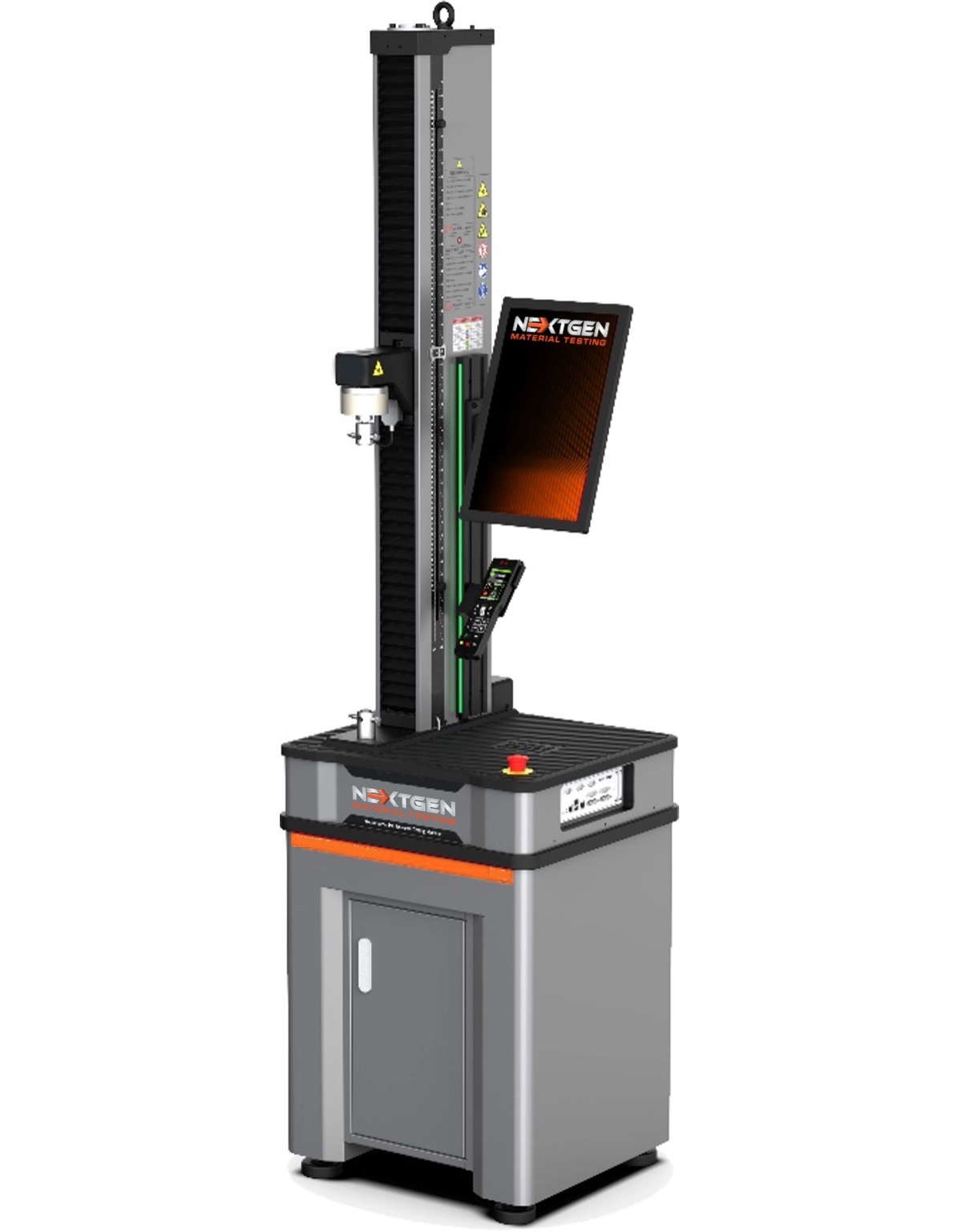
NG-EML Series A – Single Column Bench Top Universal Testing Machine (50 N – 5 kN)
NG-EML Series A is a compact single-column benchtop universal testing machine for low-force tensile, compression, and flexural testing. Covering 50 N to 5 kN capacity options, it is suited for rubber, plastics, adhesives, films, foams, wires, metals, composites, and consumer products. Its electromechanical frame, high-speed servo actuation, GenTest software, and standards support make it practical for R&D and routine QC.
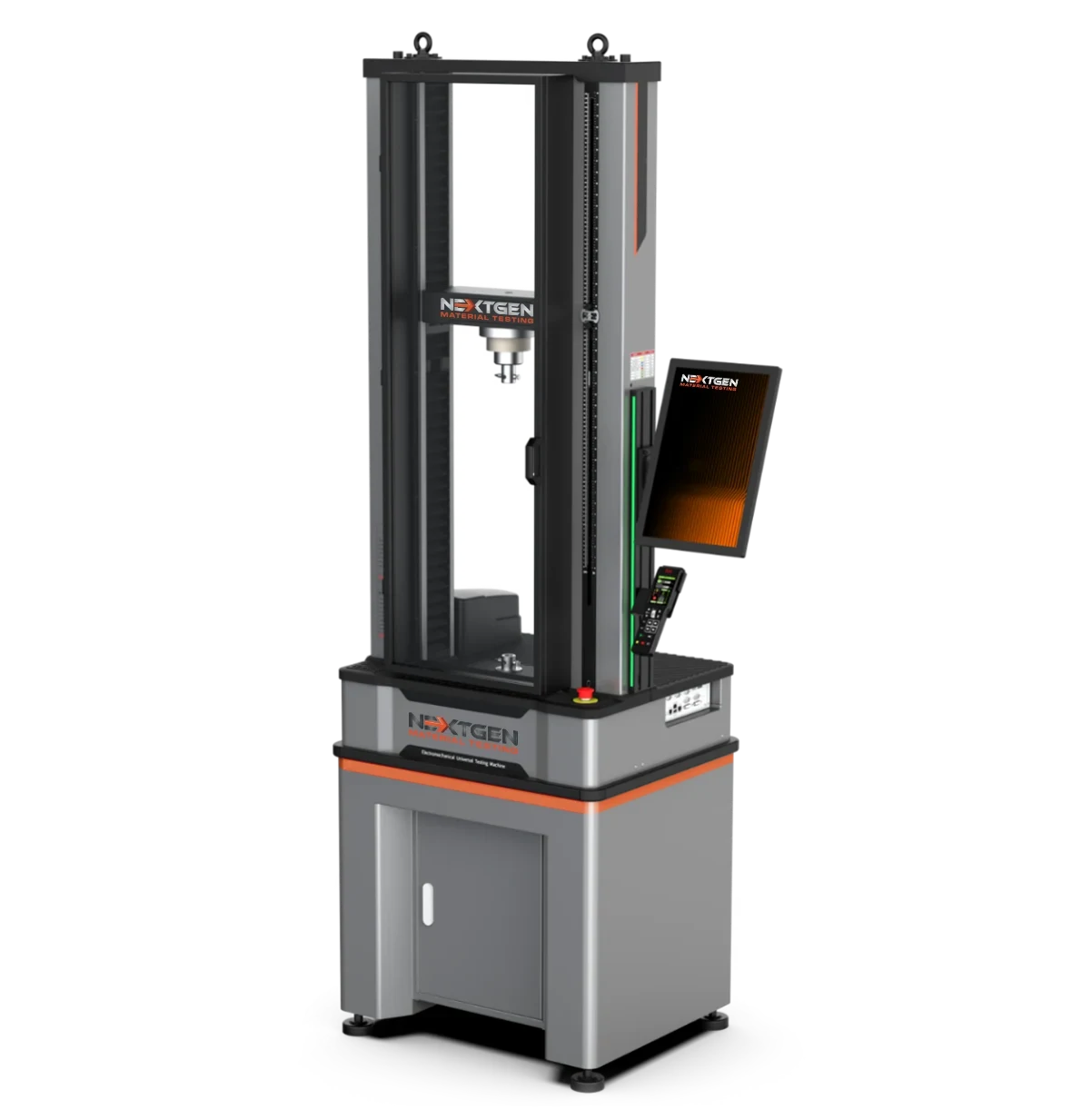
NG-EML Series B – Dual Column Bench Top Universal Testing Machine (100 N – 10 kN)
NG-EML Series B is a dual-column benchtop electromechanical universal testing machine for precision testing from 100 N to 10 kN. Built for research and industrial labs, it supports tension, compression, flexural, and component testing of composites, high-strength metals, polymers, films, foams, and rubber. Its compact rigid frame, advanced control accuracy, and GenTest software help deliver repeatable results in limited lab space.
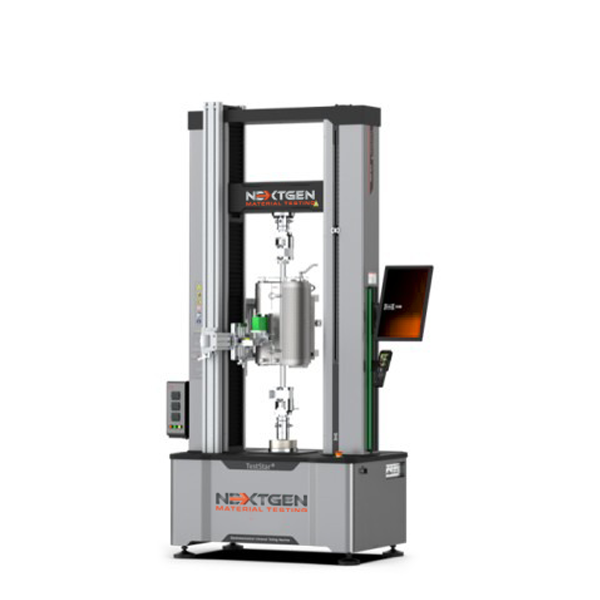
NG-EML Series C – Dual Column Bench Top and Floor Standing Universal Testing Machine (5 kN – 50 kN)
NG-EML Series C is a dual-column electromechanical universal testing machine available in bench-top and floor-standing formats from 5 kN to 50 kN. Built for tension, compression, flexural, shear, and peel testing, it combines Class 0.5 accuracy, a servo direct-drive system, high-rigidity frame, touchscreen control, and GenTest software to support precise testing of metals, composites, rubber, plastics, and polymers.
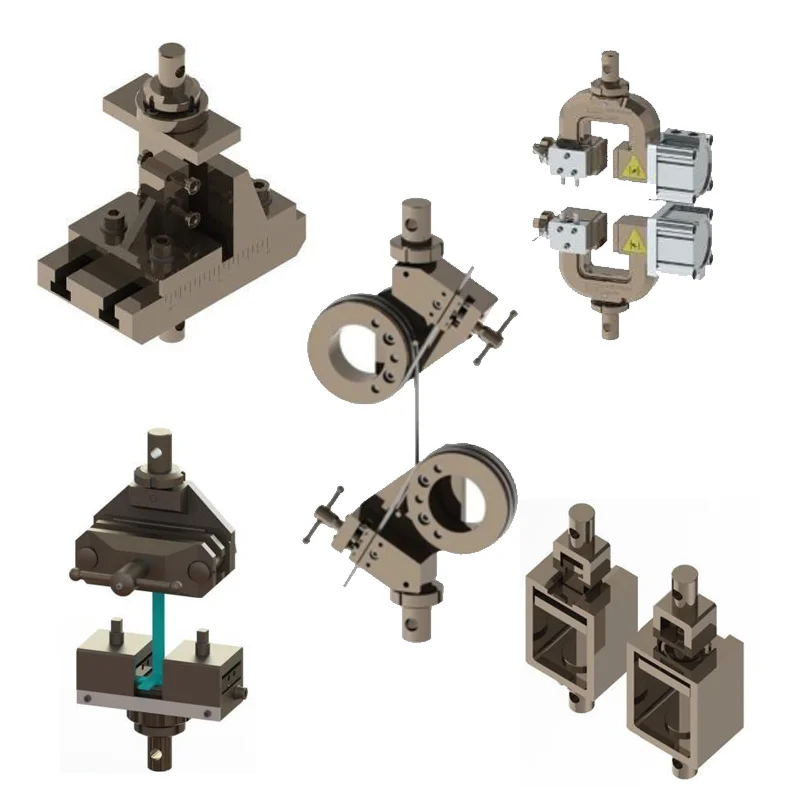
Grips and Fixtures for NextGen Universal Testing Machines (UTMs)
Grips and fixtures for NextGen universal testing machines expand UTM capability across tensile, compression, flexural, shear, peel, puncture, and specialized material tests. Compatible with electromechanical and servo-hydraulic frames, the range includes wedge, pneumatic, self-tightening, side-action, compression, snubbing, and bending solutions. Interchangeable jaws, alignment-focused construction, and ASTM/ISO support help laboratories reduce slippage, improve repeatability, and configure testing around specific specimens.
GenTest – Advanced UTM Testing Software
GenTest is NextGen’s advanced UTM testing software for electromechanical universal testing machines, managing test setup, live control, data acquisition, calculations, curves, and reporting from one method-driven environment. Preconfigured ASTM, ISO, DIN, EN, and BS templates help operators load the correct control mode, speeds, gauge length, formulas, and result fields for tensile, compression, and flexural tests.